
What Is Black Pepper Powder? Uses, Flavor, and
Date: 27 October 2026
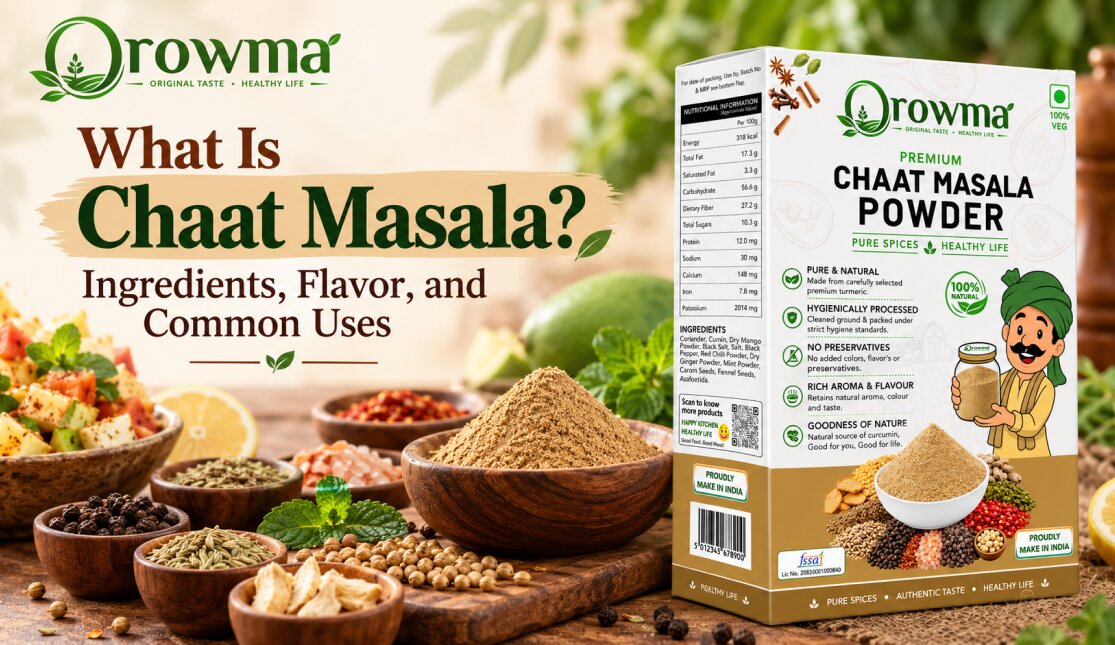
Chaat masala is a tangy, savoury Indian spice blend used to enhance the flavour of fruit chaat, salads, snacks and other everyday dishes. It commonly contains dried mango powder (amchur), black salt, cumin, coriander and black pepper, although ingredients vary by recipe. A small pinch of chaat masala powder can add a zesty kick without overpowering the food.
Have you ever wondered what gives fruit chaat, aloo chaat and many Indian snacks their distinctive tangy taste? One of the ingredients often responsible is chaat masala.
This popular Indian spice blend combines tangy, salty and earthy flavours to make everyday foods more interesting. Unlike spice blends mainly used during cooking, chaat masala is frequently sprinkled over prepared food just before serving.
From fresh fruit and cucumber salads to pakoras, chaats and roasted snacks, chaat masala powder has a place in many Indian kitchens. However, using the right quantity matters because its tanginess and saltiness can quickly become overpowering.
In this guide, you will learn what is chaat masala, its common ingredients, how it tastes, where to use it and how it differs from garam masala.
Chaat masala is a traditional Indian spice blend known for its tangy, salty and mildly spicy flavour. It is widely used in Indian street food and home cooking to enhance the taste of fresh and cooked foods.
The word chaat is associated with a variety of savoury Indian snacks that combine different textures and flavours. Chaat masala helps bring these elements together by adding a sharp, zesty taste.
Unlike some spice blends that need to be cooked in oil to release their aroma, chaat masala is often added directly to food before serving. This makes it convenient for quick seasoning.
For example, you can sprinkle it over chopped apples, bananas, cucumber, boiled potatoes or roasted makhana. It can also be mixed into chutneys, yoghurt-based preparations and snack fillings.
The main purpose of chaat masala powder is to add a tangy, savoury kick rather than make a dish very hot. Its exact flavour depends on the ingredients and proportions used in the blend.
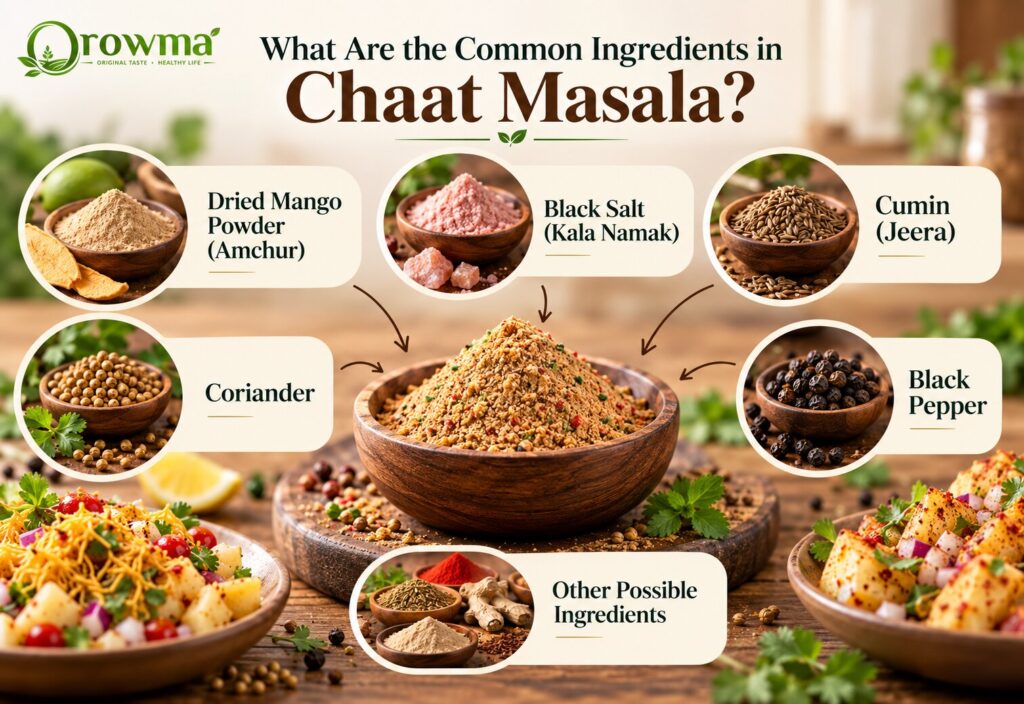
The ingredients in chaat masala can vary between traditional recipes and commercial blends. However, several spices and seasonings are commonly used to create its distinctive taste.
Amchur is made from dried unripe mangoes and contributes a sour, fruity tang. It is one of the ingredients that gives many chaat masala blends their characteristic sharpness.
Black salt provides a distinctive savoury, mineral-like taste commonly associated with Indian chaat. Its flavour differs from that of ordinary table salt and helps create the blend’s recognisable taste.
Cumin adds an earthy, warm aroma that balances the sharper ingredients. Depending on the recipe, it may be used roasted or in ground form. Cumin also features in many everyday Indian dishes, from dals to vegetable preparations. Its role in Indian cooking is explored in more detail in this guide to cumin seeds, their flavour and cooking uses.
Coriander contributes a mild, citrus-like and earthy flavour. It helps balance the stronger tangy and salty notes in the blend. Coriander is also widely used in Indian spice combinations, and its flavour varies depending on the dish and preparation. The guide to coriander powder, its flavour and cooking tips explains its everyday culinary uses.
Black pepper adds gentle heat and a warm, pungent note. It gives the blend more depth without making it taste like a chilli-heavy seasoning.
Depending on the recipe, chaat masala may also contain dried ginger, red chilli, asafoetida (hing), dried mint or other spices. Not every blend contains all these ingredients, and their proportions can differ.
If you have a food allergy, dietary restriction or sensitivity to a particular ingredient, check the product’s ingredient list before using it.
Chaat masala is best described as tangy, savoury, earthy and mildly spicy. The balance of these flavours depends on the blend.
Its main flavour characteristics include:
Chaat masala is not necessarily very hot. Its primary purpose is to brighten the flavour of food through tanginess and seasoning.
For instance, a little chaat masala can make a bowl of chopped fruit taste more lively. Sprinkled over boiled potatoes, it adds contrast to their mild, starchy flavour.
One reason chaat masala powder is so popular is its versatility. You can use it in quick snacks, fresh preparations and selected cooked dishes. The right seasoning can make a noticeable difference to a recipe, so it helps to understand how to choose spices for different Indian dishes.
Sprinkle a small amount over chopped apples, bananas, guava, papaya or seasonal fruits. The tangy seasoning complements the natural sweetness of the fruit.
Start with a pinch, toss gently and taste before adding more. Since different fruits have different levels of sweetness and acidity, adjust the quantity to suit the combination.
Chaat masala works particularly well with boiled or fried potatoes. Add it to potato cubes, wedges or tikki just before serving to give them a tangy, savoury finish.
For fried snacks, adding the seasoning after cooking can help its flavour remain noticeable.
Use chaat masala to season cucumber, tomatoes, onions, carrots and other salad vegetables. It can add flavour without requiring a complicated dressing.
You can also combine it with lemon juice, fresh herbs or a little yoghurt, depending on the recipe. Remember that both lemon juice and chaat masala can contribute tanginess, so balance the quantities accordingly.
A light sprinkle over pakoras, samosas, roasted makhana or other savoury snacks can provide extra tanginess.
Avoid adding too much at once, particularly when the snack is already salted. A small amount is often enough to complement the existing flavours.
Mix chaat masala into boiled chickpeas, moong sprouts, chopped onions, tomatoes and coriander leaves. Add lemon juice if you prefer a sharper flavour.
Because black salt and other seasonings may already contribute saltiness, taste the mixture before adding extra salt.
A small quantity can add a savoury, tangy note to cucumber raita or other yoghurt-based preparations. Add it gradually so it complements the yoghurt rather than dominating its mild flavour.
You can also experiment with a light sprinkle in vegetable sandwiches, wraps, corn chaat or roasted peanuts. The best quantity depends on the other ingredients and the salt already present.
There is no single quantity that works for every recipe. The right amount depends on the portion size, the ingredients and your preference for tangy or salty flavours.
Follow these practical tips:
For cooked dishes, add chaat masala according to the recipe. Some preparations benefit from seasoning at the end, while others may require it to be mixed in earlier.
The key is balance: chaat masala should enhance the food’s natural flavour, not cover it completely.
Although both are popular Indian spice blends, chaat masala and garam masala serve different purposes.
Feature | Chaat Masala | Garam Masala |
Main flavour | Tangy, salty and savoury | Warm, aromatic and spicy |
Common ingredients | Amchur, black salt, cumin, coriander and black pepper | Often cumin, coriander, cardamom, cloves, cinnamon and black pepper |
Common uses | Fruit chaat, salads, snacks and savoury chaats | Curries, dal, sabzi, gravies and other cooked dishes |
Typical application | Often sprinkled over food before serving | Commonly added during cooking or near the end |
Main purpose | Adds tanginess and a savoury kick | Adds warmth, aroma and depth |
These are general differences; individual recipes can vary.
Usually, they are not direct substitutes. Garam masala generally lacks the characteristic tanginess and black-salt flavour of chaat masala. Similarly, chaat masala may make a curry or gravy more sour and salty than intended.
Choose the blend according to the flavour you want to achieve.
When selecting chaat masala powder, look beyond the packaging and consider the ingredients, aroma, freshness and storage information.
Read the label to understand which spices and seasonings are included. Compare products based on your cooking preferences and any dietary requirements.
A fresh spice blend should have a noticeable aroma appropriate to its ingredients. A weak or stale smell may indicate that its flavour has faded, although aroma alone cannot establish product quality or safety. Understanding the signs of fresh spices can help you assess their condition.
Choose a properly sealed pack with clear ingredient, manufacturing, best-before and storage information. Avoid damaged packaging or products with unclear labelling.
Keep chaat masala in an airtight container in a cool, dry place, away from moisture, direct sunlight and heat. Use a clean, dry spoon to prevent moisture from entering the container.
Proper storage helps preserve the aroma and flavour of ground spices for longer. Keep the container tightly closed after each use and follow the storage instructions on the product packaging. These spice storage practices for maintaining freshness can be applied to chaat masala as well.
When shopping for chaat masala online, review the product description, ingredient list, net quantity, packaging details and seller information. These details help you make a more informed choice. Comparing these factors is also useful when choosing spices online.
Chaat masala is a versatile Indian spice blend that brings tanginess, savoury depth and a mild spicy kick to everyday food. Common ingredients such as amchur, black salt, cumin, coriander and black pepper work together to create its distinctive flavour, although recipes differ.
From fruit chaat and aloo chaat to salads, pakoras and roasted snacks, a small amount can make simple dishes more flavourful. Start with a pinch, taste as you go and adjust the seasoning to suit the recipe.
For the best results, choose a well-labelled, fresh spice blend and store it properly to help preserve its aroma and flavour. With the right balance, chaat masala can become a useful addition to your everyday Indian cooking.
Chaat masala commonly contains dried mango powder (amchur), black salt, cumin, coriander and black pepper. Some recipes also include dried ginger, red chilli, asafoetida or dried mint. Ingredients and proportions vary by blend.
Chaat masala is generally more tangy and savoury than intensely hot. Amchur contributes sourness, black salt adds a distinctive savoury taste, and spices such as black pepper provide warmth and mild heat. The exact balance depends on the recipe.
You can use chaat masala on fruit chaat, aloo chaat, cucumber salads, boiled chickpeas, sprouts, pakoras, samosas, roasted makhana and other savoury snacks. It can also be added to selected yoghurt-based dishes and quick snacks.
Not usually as a direct substitute. Chaat masala provides tanginess and saltiness, while garam masala generally adds warm, aromatic spice flavours to cooked dishes. Substituting one for the other can noticeably change the taste of a recipe.
Yes, depending on the dish and recipe. However, chaat masala is often sprinkled over prepared food or added near the end of cooking, particularly in snacks, salads and chaats. This allows its tangy flavour to remain noticeable.
Store chaat masala in an airtight container in a cool, dry place, away from moisture, direct sunlight and heat. Always use a dry spoon and follow the storage instructions on the product packaging to help maintain its flavour and aroma.
At Orowma, we bring authentic Indian flavors to your kitchen with carefully crafted spices and masalas. Made using traditional recipes and quality ingredients, our range includes spice powders, blended masalas, and whole
Get Started Now
Date: 27 October 2026
Date: 25 October 2026
Date: 22 October 2026
We use cookies to improve your browsing experience, analyze website traffic, and provide essential website functionality. You can accept all cookies, reject non-essential cookies, or manage your preferences.
Manage your cookie preferences. You can enable or disable different categories of cookies below.
Essential cookies enable basic functions and are necessary for the proper function of the website.
Marketing cookies are used to follow visitors to websites. The intention is to show ads that are relevant and engaging to the individual user.
Website security powered by MilesWeb
Login to continue to Orowma
Join Orowma today
Enter the 6-digit code sent to your email.