
What Is Chaat Masala? Ingredients, Flavor, and Common
Date: 30 October 2026
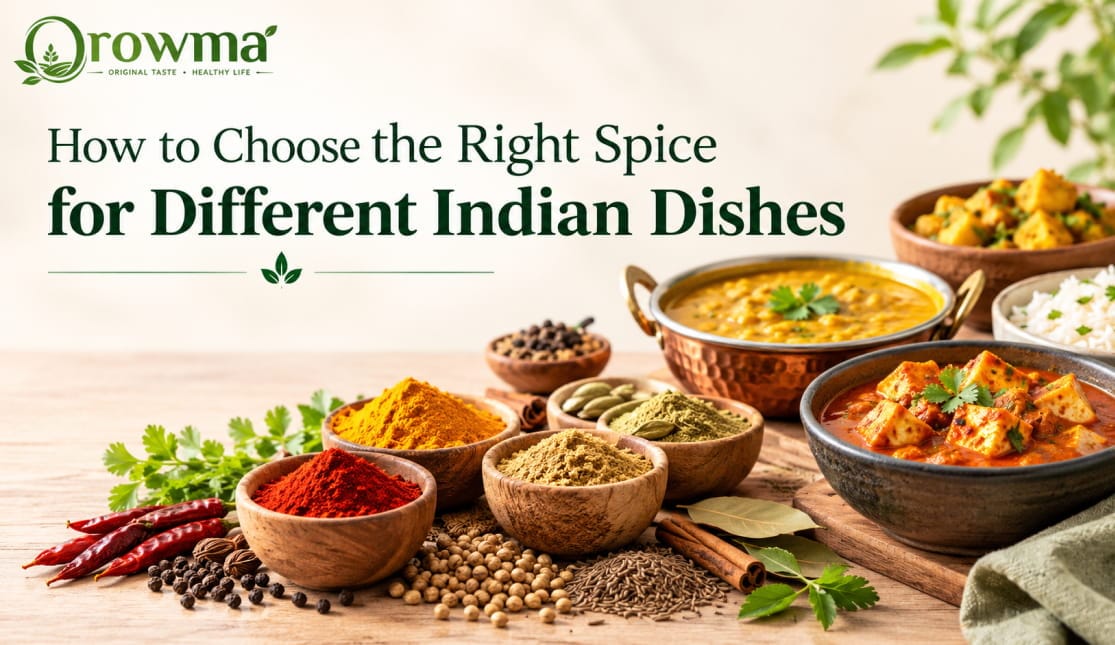
Choosing the right Indian spices for cooking can shape the flavour, aroma, colour, and character of a dish. This guide explains how to choose spices for dal, rice, curry, vegetables, paneer, and snacks, along with practical tips for using whole and ground spices, balancing flavours, selecting quality spices, and understanding regional variations in Indian cooking.
Indian cooking is closely connected with spices. From the cumin tempering added to a bowl of dal to the aromatic whole spices used in pulao, even a simple home-cooked meal can have layers of flavour. Yet choosing the right spice is not always about following a fixed recipe. The same vegetable can be prepared with different spice combinations depending on the region, cooking method, and personal preference. Understanding Indian spices for cooking makes it easier to decide what your dish actually needs. Cumin can bring an earthy warmth, coriander adds a mellow aromatic character, turmeric gives colour and an earthy note, while chilli contributes heat. Once you understand these differences, you can use spices more confidently and create balanced Indian dishes without relying on complicated masala combinations.
Spices do much more than make food spicy. They help create the foundation, aroma, colour, warmth, and finishing character of a dish.
Take a simple vegetable sabzi. Cumin can provide an earthy base, coriander can add a mild aromatic quality, turmeric gives the familiar yellow colour, and red chilli introduces heat. Used in the right proportions, these spices complement the vegetables instead of overpowering them.
The same principle applies to dal, rice, paneer, and curry. Some dishes need a fragrant tempering, while others benefit from a carefully balanced ground-spice mixture.
This is why understanding spices for Indian dishes is more useful than simply adding several spices because they are available in the kitchen.
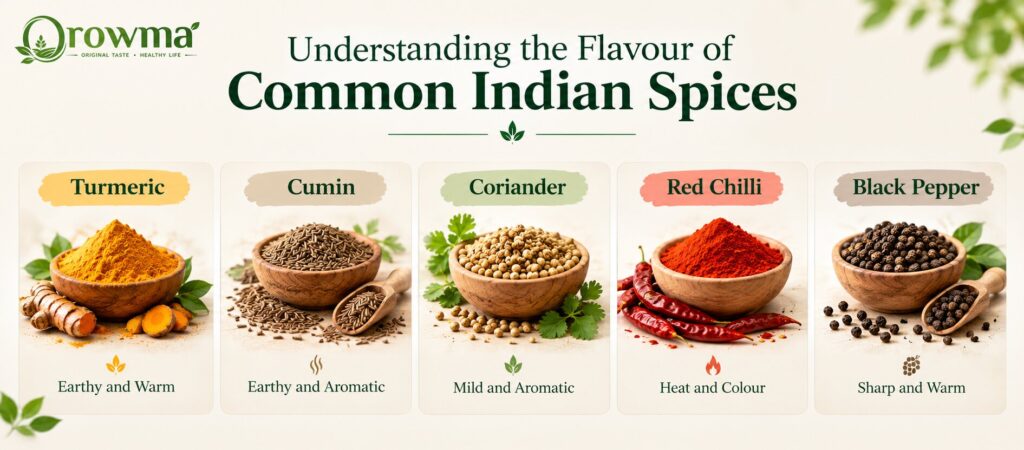
Turmeric powder is one of the most familiar ingredients in Indian kitchens. It has an earthy flavour and is used in small quantities to give food its characteristic yellow colour.
It works well in:
Cumin has a distinctive earthy and warm aroma, making it one of the most versatile cooking spices for Indian meals.
Whole cumin seeds are often added to hot oil or ghee at the beginning of cooking. This process, known as tempering or tadka, releases their aroma before the other ingredients are added.
Ground cumin can be used in:
Coriander has a relatively mellow flavour and pairs well with many other spices.
Ground coriander is a useful addition to curries, vegetable preparations, dals, and masalas. It adds an aromatic, slightly citrus-like character without introducing significant heat.
It works particularly well when you want a curry to have a rounded spice profile rather than being dominated by chilli or another strong ingredient.
Red chilli contributes heat, colour, or both, depending on the variety.
Some chilli varieties are chosen mainly for colour with comparatively moderate heat, while others are much hotter. This is worth considering when cooking for a family with different spice preferences.
Red chilli powder should be added according to the desired heat and colour rather than simply using more for a stronger flavour.
A well-balanced curry does not have to be extremely hot.
Black pepper has a sharp, warm flavour that works in both traditional and everyday Indian preparations.
It can be used in:

There is no universal spice combination for every Indian dish. The ingredients, cooking method, and regional style all influence the choice.
Dal is a simple example of how spices can change a dish.
A basic dal may use turmeric along with a tempering of cumin, garlic, dried chilli, or mustard seeds. Coriander can also be used depending on the recipe.
Some combinations include:
Simple dal: turmeric + cumin + chilli
Jeera dal: turmeric + cumin + garlic
Dal tadka: cumin or mustard seeds + garlic + dried chilli + selected aromatic spices
The tempering is important because heating whole spices in oil or ghee helps release their aroma before they are mixed into the dal.
Rice generally benefits from spices that add fragrance without overpowering the grain.
For simple flavoured rice, common choices include:
Curry is where several spices often work together.
A basic North Indian-style curry may include:
Vegetable dishes are particularly flexible.
For potatoes, cauliflower, peas, carrots, beans, and mixed vegetables, combinations of turmeric, cumin, coriander, chilli, and garam masala can work well.
For a dry sabzi, whole cumin or mustard seeds can provide the initial aroma, followed by turmeric and other ground spices.
For a gravy-based vegetable curry, cumin and coriander can form the base, while chilli and garam masala can provide additional warmth and depth.
Paneer has a mild flavour, which makes it suitable for a range of aromatic spices.
Depending on the recipe, you can use:
Chaat is known for combining contrasting flavours such as spicy, tangy, salty, aromatic, and mildly sweet notes.
Chaat masala is a useful finishing seasoning for:
Both whole and ground spices have an important role in Indian cooking. Whole spices are commonly used for tempering and release their aroma gradually when heated in oil or ghee. Ground spices blend easily into curries, dal, vegetables, and gravies. Choosing between them depends on the dish, cooking method, and the flavour you want to achieve.
Whole spices are particularly useful when you want to build aroma at the beginning of cooking.
Common examples include:
Ground spices are convenient when you want their flavour to spread evenly through a curry, gravy, dal, or masala.
Common examples include:
The quality of a spice can influence the aroma, colour, and overall cooking result.
Fresh spices should have a clear, characteristic aroma. A weak, stale, dusty, or musty smell can indicate that a spice has lost some of its freshness.
Spices should have a natural appearance appropriate to the ingredient. Dull-looking spices may have been stored for a long time, although colour alone cannot determine quality.
Choose properly packed products with clear information such as ingredients, net quantity, batch details, and relevant dates.
Whole spices can be useful when you want to grind or roast them yourself, while ground spices offer convenience for everyday cooking.
For everyday kitchen cooking, Orowma offers a range of spices suited to familiar Indian recipes and regular pantry use.
Adding spices gradually is one of the easiest ways to maintain balance.
Begin with the spices that form the foundation of the dish. Cumin, coriander, or turmeric can provide a starting point for many dal and vegetable preparations.
Add turmeric, coriander, chilli, and other powdered spices in measured quantities. It is easier to add more later than to correct an overly strong spice mixture.
The same quantity of spice may taste different depending on the amount of vegetables, liquid, oil, and other ingredients in a recipe.
Taste the dish before making another adjustment.
Garam masala contains multiple warming spices, so a small amount can have a noticeable effect. Depending on the recipe, it may be added toward the end to preserve its aroma.
More spices do not automatically mean more flavour. Too many strong ingredients can make the individual flavours difficult to distinguish.
Whole spices are usually added to hot oil, but excessive heat can burn them quickly. Burnt spices may introduce a bitter taste.
Ground spices gradually lose aroma over time. A spice that has been sitting in the cupboard for too long may not provide the same flavour as a fresher batch.
Chilli powder can vary considerably in heat. Add it gradually, especially when cooking for children or people who prefer milder food.
The timing of a spice can affect its flavour. Cumin seeds tempered in oil have a different character from cumin powder added to a curry later in the cooking process.
A basic kitchen collection of turmeric, cumin, coriander, red chilli, black pepper, and garam masala can cover many everyday Indian recipes.
Indian cuisine does not follow one universal spice formula. Spice combinations can vary between regions, communities, recipes, and even individual households.
North Indian dishes may feature combinations of cumin, coriander, turmeric, chilli, and garam masala, while many South Indian preparations use ingredients such as mustard seeds, curry leaves, dried red chillies, cumin, and fenugreek in different proportions.
Other regional cuisines have their own distinctive spice blends and cooking techniques. Gujarati preparations may combine sweet, sour, and spicy notes, while Bengali cooking may feature blends such as panch phoron. Rajasthani and Kashmiri cuisines also have characteristic approaches to seasoning.
These are broad culinary patterns rather than strict rules. Indian home cooking is highly diverse, and the same dish can be prepared differently depending on family traditions, locally available ingredients, and personal taste.
You do not need a complicated masala mixture for every meal.
Think first about the flavour you want:
Desired flavour | Spices to consider |
Earthy | Cumin, coriander |
Warm | Cumin, black pepper, cinnamon |
Aromatic | Cardamom, cloves, bay leaf |
Spicy | Red chilli, black pepper |
Mildly sweet and warm | Cinnamon, cardamom |
Tangy and savoury | Chaat masala, cumin |
Deep curry flavour | Cumin, coriander, turmeric, chilli |
These combinations are starting points rather than strict rules. Adjust them according to the recipe, main ingredient, cooking method, and your family’s preferred taste.
Choosing the right Indian spices for cooking becomes much easier when you understand what each spice contributes to a dish. Cumin can create an earthy base, coriander adds a mellow aromatic quality, turmeric brings colour and warmth, while chilli and black pepper provide different levels of heat. Whole spices are useful for tempering and building aroma, whereas ground spices are convenient for curries, dal, vegetables, and gravies. The key is not to use more spices, but to use the right spices in the right quantities and at the right stage of cooking. Start with familiar staples, taste as you cook, and adjust according to the dish. With practice, choosing spices for Indian dishes becomes an intuitive part of cooking rather than a matter of simply following fixed measurements.
Common Indian cooking spices include turmeric, cumin, coriander, red chilli, black pepper, mustard seeds, cardamom, cloves, cinnamon, and garam masala. The combination varies according to the dish and regional cooking style.
Cumin, coriander, turmeric, and red chilli are often used as a base for Indian curries. Garam masala, black pepper, and whole spices can be added depending on the specific recipe.
Turmeric, cumin, dried red chilli, garlic, and mustard seeds can be used in different dal preparations. The exact combination varies according to regional and household recipes.
Cumin, cardamom, cinnamon, cloves, and bay leaf work well in flavoured rice dishes. Cumin is particularly suitable for jeera rice, while several whole spices may be used in pulao and biryani.
Look for spices with a fresh, characteristic aroma, natural-looking colour, clear packaging information, and appropriate storage. Avoid spices with a stale, damp, or musty smell.
Whole spices are useful for tempering and infusing oil or ghee with aroma. Ground spices are convenient for curries, dals, gravies, and masalas where the flavour needs to spread evenly.
Start with small quantities, especially when using strong spices such as chilli, black pepper, cloves, or garam masala. Taste the dish before adding more seasoning.
Whole spices are often added to hot oil or ghee near the beginning of cooking. Ground spices are generally cooked with the main ingredients, while finishing spices such as garam masala may be added toward the end, depending on the recipe.
Store spices in airtight containers away from moisture, direct sunlight, and excessive heat. Always use clean, dry spoons and keep containers closed when not in use.
Yes. Regional Indian cuisines have distinct spice combinations, cooking techniques, and flavour preferences. However, these patterns can vary considerably between recipes and households.
At Orowma, we bring authentic Indian flavors to your kitchen with carefully crafted spices and masalas. Made using traditional recipes and quality ingredients, our range includes spice powders, blended masalas, and whole
Get Started Now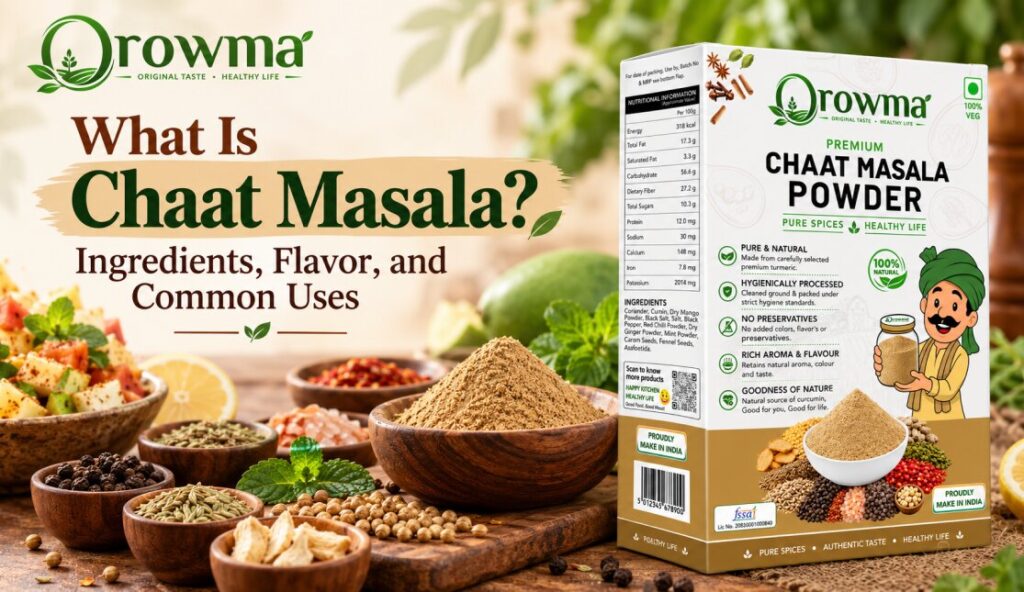
Date: 30 October 2026
Date: 27 October 2026
Date: 25 October 2026
We use cookies to improve your browsing experience, analyze website traffic, and provide essential website functionality. You can accept all cookies, reject non-essential cookies, or manage your preferences.
Manage your cookie preferences. You can enable or disable different categories of cookies below.
Essential cookies enable basic functions and are necessary for the proper function of the website.
Marketing cookies are used to follow visitors to websites. The intention is to show ads that are relevant and engaging to the individual user.
Website security powered by MilesWeb
Login to continue to Orowma
Join Orowma today
Enter the 6-digit code sent to your email.