
What Is Chaat Masala? Ingredients, Flavor, and Common
Date: 30 October 2026

Turmeric powder is one of the most familiar spices in Indian kitchens. Made by drying and grinding turmeric rhizomes, it is known for its deep yellow color, earthy aroma, and slightly bitter taste. In India, it is commonly called haldi and is used in everything from everyday dal and vegetable dishes to curries, rice, marinades, and spice blends. Turmeric powder is not usually meant to be the main flavor of a dish. Instead, it works quietly alongside other ingredients, adding color and a gentle earthy note. It also naturally contains curcumin and other curcuminoids, which are responsible for some of turmeric's characteristic properties.
If you have ever cooked an Indian meal, chances are turmeric powder has found its way into one of your dishes. A small spoonful can turn a simple dal or vegetable preparation a beautiful golden yellow while adding a mild earthy flavor.
But what is turmeric powder, exactly? It is the dried and ground form of the turmeric rhizome, a part of the Curcuma longa plant. Although turmeric is strongly associated with Indian cuisine, its use has spread far beyond India. Today, it appears in recipes across different cuisines, from soups and rice dishes to marinades and roasted vegetables.
Knowing how turmeric behaves during cooking makes it easier to use the spice without letting its slightly bitter taste overpower the rest of the dish.
Turmeric powder is a finely ground spice made from the dried rhizomes of Curcuma longa. The plant belongs to the ginger family and has been used in South Asian cooking for centuries.
The rhizomes are harvested, cleaned, dried, and ground into a powder. This gives turmeric its familiar yellow to golden-orange appearance.
Its flavor is earthy, warm, and slightly bitter. Unlike spices such as chilli or black pepper, turmeric is generally not used to provide strong heat. Instead, it adds depth and color while blending with the other spices in a recipe.
This is why turmeric is so common in everyday Indian cooking. Whether it is dal, sabzi, curry, or khichdi, it can become part of the dish without dominating the overall flavor.
Orowma, like many Indian spice, includes turmeric powder among the basic spices commonly used in home kitchens.
Fresh turmeric and turmeric powder come from the same plant, but they are quite different to work with.
Fresh turmeric is the raw rhizome. It contains more moisture and usually needs to be peeled, grated, or sliced before it can be added to a dish. It has a fresh, slightly sharper character and can stain hands and utensils quite easily.
Turmeric powder has already been dried and ground, so it is much easier to measure and use. It can be added directly to a curry, dal, marinade, or vegetable dish.
Neither form is necessarily better for every recipe. The choice depends on the dish and the flavor you want.
For a closer look at the difference between the two forms, see whole spices and ground spices.
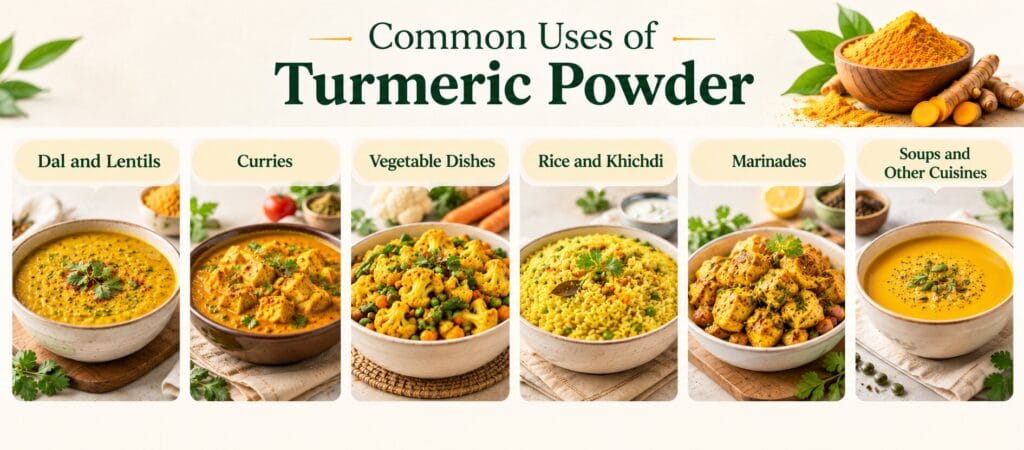
Dal is one of the simplest places to see what turmeric can do.
A small amount of turmeric gives lentils their familiar golden color and adds a mild earthy taste. It is often cooked with cumin, onion, garlic, ginger, tomatoes, or chilli.
The important thing is not to use too much. Turmeric is quite noticeable when overused and can leave the dish tasting bitter.
Turmeric is a familiar ingredient in many Indian curry recipes.
It is commonly added while preparing the curry base, along with spices such as cumin, coriander, chilli, and other seasonings. As the onions, tomatoes, oil, or other ingredients cook, the turmeric becomes part of the overall flavor.
It can be used in vegetable curries as well as recipes containing paneer, fish, chicken, or other ingredients.
From aloo gobi to simple stir-fried vegetables, turmeric can be used in countless sabzi preparations.
Potatoes, cauliflower, peas, beans, carrots, okra, and leafy vegetables all work well with it. Often, just a small amount is enough to give the dish a warm color and subtle flavor.
This is one reason turmeric remains such a practical everyday spice.
Turmeric is also useful in rice-based dishes.
A little powder can give khichdi, pulao, and other rice preparations a soft golden color. It pairs naturally with cumin and whole spices such as bay leaf, cardamom, cinnamon, and cloves.
If you are exploring other everyday spices, this guide to essential Indian spices covers several common ingredients and their uses.
Turmeric works particularly well in marinades because it can be mixed easily with both dry and wet ingredients.
It may be combined with yogurt, lemon juice, ginger, garlic, chilli, cumin, or coriander when preparing marinades for paneer, vegetables, fish, or meat.
Here, turmeric contributes color and a mild earthy note, while the other ingredients provide acidity, heat, and aroma.
There is no rule saying turmeric has to be used only in Indian recipes.
It can be added to soups, roasted vegetables, stews, sauces, grain bowls, and other savory dishes. In small quantities, its earthy flavor can work surprisingly well with ingredients such as ginger, garlic, black pepper, and cumin.
This wider use has made turmeric a familiar spice in kitchens well beyond South Asia.
There is no single correct amount of turmeric for every recipe. It depends on the quantity of food, the other spices being used, and the flavor you want.
In most dishes, turmeric is added during cooking rather than at the very end. It can go into the spice mixture for a curry, directly into dal, or into vegetables as they cook.
One thing worth remembering is that turmeric can become bitter if it is burnt. Ground spices cook quickly, so very high heat is usually unnecessary.
The goal is to let turmeric blend into the dish rather than allowing it to sit or burn in hot oil.
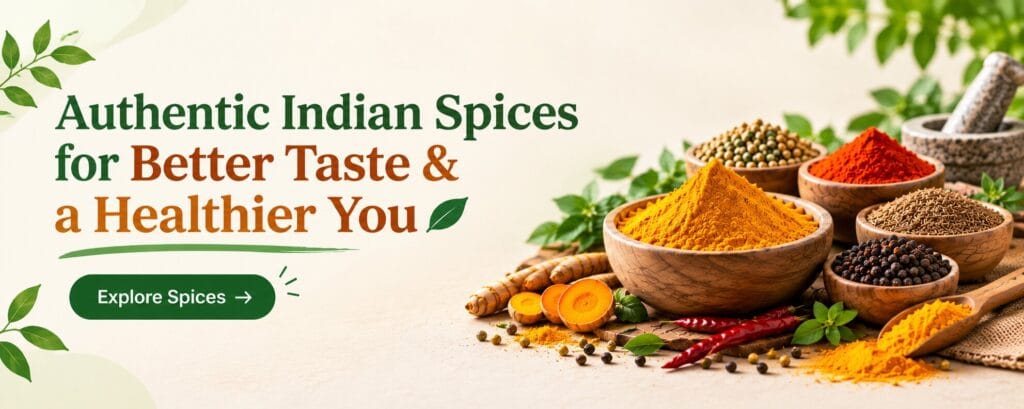
Turmeric naturally contains several compounds known as curcuminoids. Curcumin is the best-known of these compounds and contributes to turmeric’s characteristic yellow color.
Curcumin has been the subject of considerable scientific research. However, culinary turmeric and concentrated curcumin supplements are not the same thing. The amount consumed when using turmeric as a cooking spice is relatively small.
For everyday cooking, turmeric is best appreciated for what it brings to food: color, aroma, and flavor.
Turmeric powder should be kept away from moisture, heat, and direct sunlight.
An airtight container in a cool, dry cupboard is usually a good option. Always use a dry spoon when taking out the powder, as moisture can cause clumping and affect its quality.
Over time, ground spices can lose some of their aroma and flavor, particularly when exposed to air, heat, or light. Understanding why spices lose their flavor can help you store them more effectively.
When buying turmeric powder, start with the basics: check the ingredient list, packaging, aroma, and storage condition.
Pure turmeric powder should not need a long ingredient list. Its natural color can range from yellow to deeper golden-orange depending on the turmeric variety and how it has been processed.
A very bright color alone should not be treated as proof of quality. Good packaging, clear labeling, and proper storage are also important.
For general guidance, this article on buying fresh and authentic spices online covers some practical points to consider when choosing packaged spices.
Turmeric powder may look simple, but it plays an important role in everyday cooking. It brings color, earthy flavor, and warmth to dishes without needing to be used in large amounts. From dal and sabzi to curries, rice, marinades, and soups, its uses are remarkably varied. The key is balance: too little may go unnoticed, while too much can introduce bitterness. Storing the powder properly also helps preserve its aroma and flavor. Whether you know it as turmeric or haldi, it remains one of the most useful and recognizable spices in Indian cooking and has become increasingly common in kitchens around the world.

Turmeric powder is made by drying and grinding the rhizomes of the Curcuma longa plant. It is used as a spice to add color and earthy flavor to food.
Yes. Haldi is the commonly used Hindi name for turmeric.
Turmeric powder is commonly used in dal, curries, vegetables, rice, khichdi, marinades, soups, sauces, and spice blends.
Turmeric has an earthy, warm, and slightly bitter flavor. It is normally used in small quantities and combined with other spices.
Curcumin is one of the naturally occurring curcuminoids found in turmeric. It is also associated with turmeric's characteristic yellow color.
Turmeric is commonly used as a regular cooking spice. The amount depends on the recipe and personal taste.
Turmeric is generally added during cooking along with other spices. It can be used in curry bases, dal, vegetables, rice dishes, and marinades.
Keep turmeric powder in an airtight container in a cool, dry place away from sunlight, heat, and moisture. Use a clean, dry spoon when handling it.
At Orowma, we bring authentic Indian flavors to your kitchen with carefully crafted spices and masalas. Made using traditional recipes and quality ingredients, our range includes spice powders, blended masalas, and whole
Get Started Now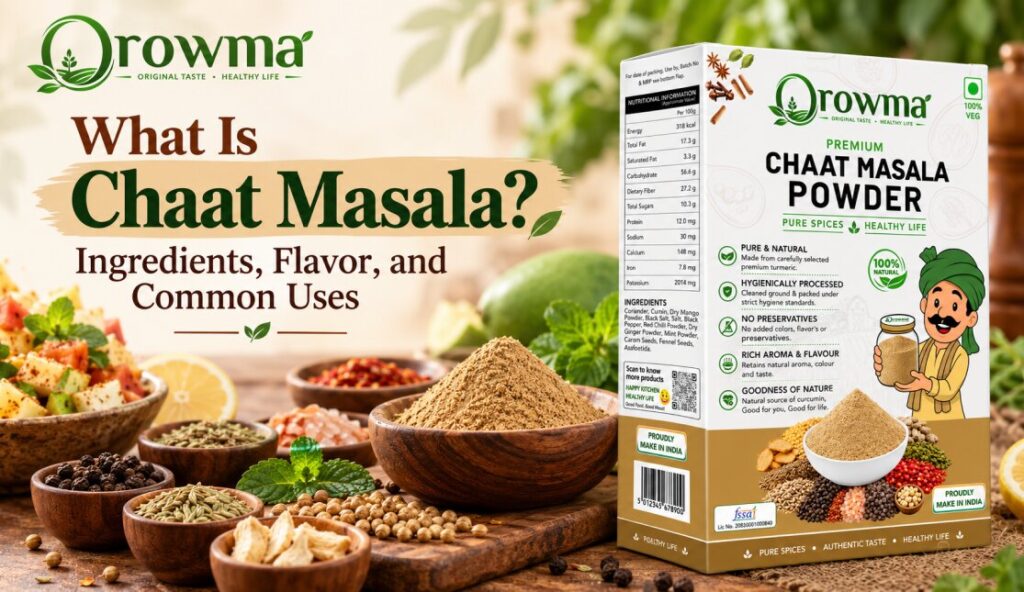
Date: 30 October 2026
Date: 27 October 2026

Date: 25 October 2026
We use cookies to improve your browsing experience, analyze website traffic, and provide essential website functionality. You can accept all cookies, reject non-essential cookies, or manage your preferences.
Manage your cookie preferences. You can enable or disable different categories of cookies below.
Essential cookies enable basic functions and are necessary for the proper function of the website.
Marketing cookies are used to follow visitors to websites. The intention is to show ads that are relevant and engaging to the individual user.
Website security powered by MilesWeb
Login to continue to Orowma
Join Orowma today
Enter the 6-digit code sent to your email.