
What Is Chaat Masala? Ingredients, Flavor, and Common
Date: 30 October 2026
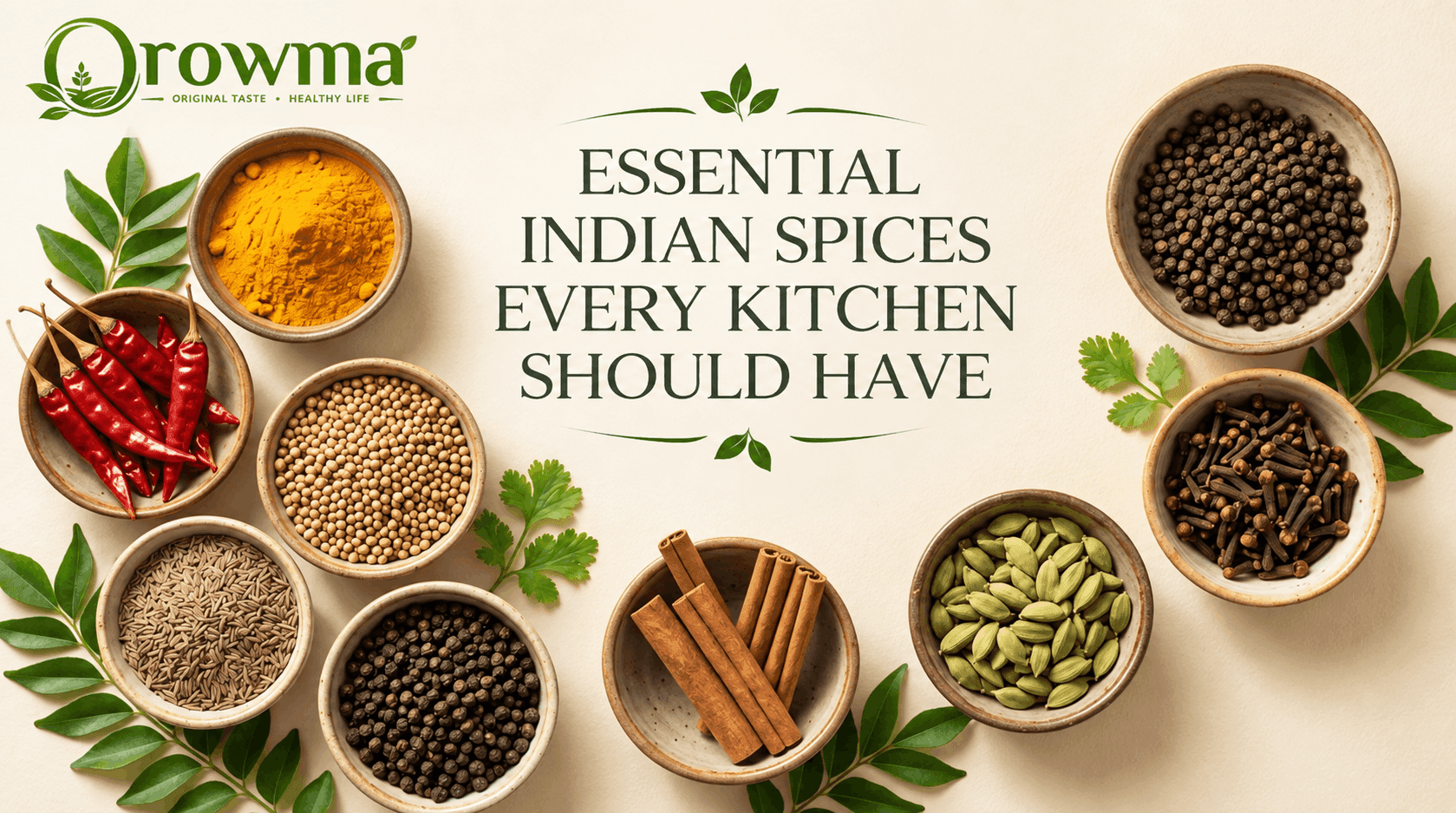
A well-stocked spice shelf makes everyday cooking easier, more flavorful, and more versatile. While Indian cuisine uses a wide variety of spices, a few essentials form the foundation of countless recipes. Turmeric, red chilli, coriander, cumin, garam masala, and black pepper can help you prepare everything from dals and curries to rice dishes, vegetables, marinades, and snacks. Choosing fresh, good-quality spices also matters because aroma, color, and flavor can fade with poor storage or age. Whether you cook Indian food regularly or simply want to add more depth to everyday meals, these essential Indian spices are a practical starting point.
Indian cooking is known for its bold flavors, but you do not need dozens of spice jars to recreate that depth at home. A small collection of versatile Indian spices can transform simple ingredients into flavorful meals. From the warm color of turmeric to the earthy taste of cumin and the heat of red chilli, each spice has a distinct role in the kitchen.
The best approach is to start with spices you will actually use regularly. Once your basic collection is ready, you can add regional spices and specialty blends based on your cooking style. For beginners and experienced home cooks alike, the following spices are some of the most useful staples to keep within easy reach.
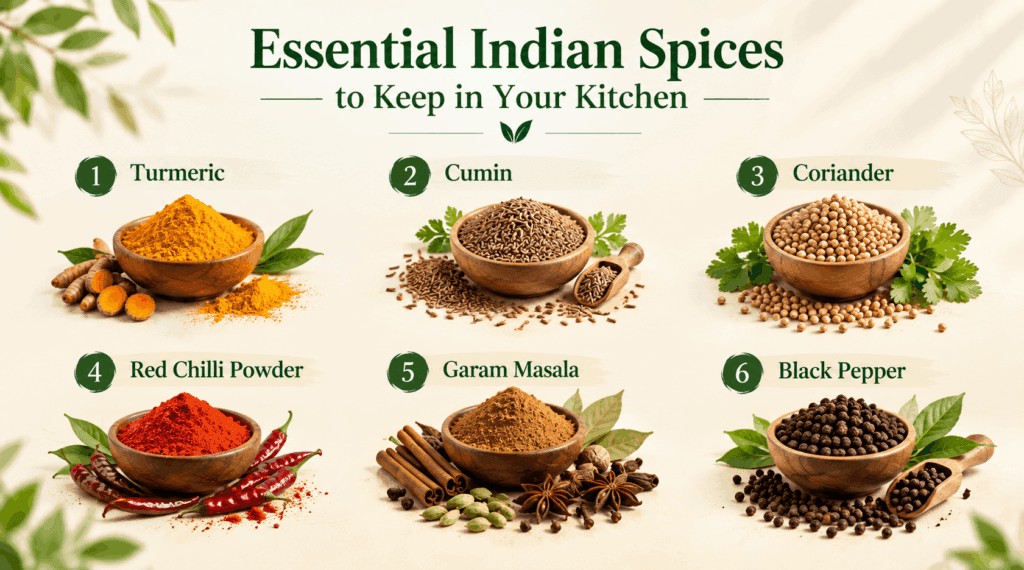
Turmeric is one of the most widely used spices in Indian cooking. It is recognized by its bright yellow color and earthy, slightly bitter flavor.
It is commonly added to dal, vegetable dishes, curries, rice, soups, and marinades. Turmeric is usually used in small quantities because its flavor and color can become strong when too much is added.
For everyday cooking, turmeric powder is convenient because it can be added directly to recipes without grinding whole turmeric.
Common uses: Dal, sabzi, curry, rice, soups, and marinades.
Cumin, commonly called jeera, is an important spice in many Indian kitchens. It has a warm, earthy, and slightly nutty flavor.
Whole cumin seeds are especially useful for tempering, or tadka. When added to hot oil or ghee, they release their aroma and add depth to the dish. Ground cumin is also used in spice blends, raita, chaas, and some snacks.
Cumin seeds can be used whole, roasted, or ground depending on the recipe.
Common uses: Tadka, dal, jeera rice, raita, vegetables, and spice blends.
Coriander powder is made from dried coriander seeds and has a mild, earthy flavor with subtle citrusy notes. It is often used to build the base flavor of Indian curries and gravies.
Unlike some stronger spices, coriander powder is relatively mild, so it can be used in larger quantities without overwhelming a dish. It pairs particularly well with cumin, turmeric, and chilli.
Coriander powder is commonly used in curries, dals, vegetable dishes, marinades, and chutneys.
Common uses: Curries, gravies, dal, vegetables, marinades, and chutneys.
Red chilli powder is used primarily to add heat and color. Its strength can vary considerably depending on the type of chilli used.
It is found in many Indian recipes, including curries, dals, vegetable dishes, chutneys, marinades, and snacks. The amount should be adjusted according to the spice level you prefer.
Red chilli powder can also be combined with other spices to create a balanced flavor rather than relying on chilli alone for heat.
Common uses: Curries, dals, sabzis, chutneys, marinades, and snacks.
Garam masala is a spice blend rather than a single spice. Its exact ingredients can vary, but common components include cumin, coriander, black pepper, cinnamon, cloves, and cardamom.
It is often added toward the end of cooking because its main purpose is to enhance aroma and add warmth. Depending on the recipe, it can be used in curries, dals, rice dishes, vegetables, soups, and marinades.
Garam masala is particularly useful when you want to add several complementary spice flavors without measuring multiple individual spices.
Common uses: Curries, biryani, dal, vegetables, gravies, and marinades.
Black pepper has a sharp, pungent flavor and provides a different type of heat from red chilli. It can be used whole, cracked, or ground.
Freshly ground black pepper works well in soups, rice dishes, vegetables, salads, and marinades. It is also useful outside Indian cooking, making it a versatile spice for any kitchen.
Because its aroma can fade over time, storing whole peppercorns and grinding them when needed can help maintain their flavor.
Common uses: Soups, vegetables, rice, marinades, salads, and spice blends.
If you are new to Indian cooking, start with a few spices rather than buying a large collection at once. Turmeric, cumin, coriander, and red chilli are a practical starting point because they appear in many everyday recipes.
You can then add garam masala and black pepper as you become familiar with different flavors. A basic combination of these spices can be used to prepare a wide variety of dishes.
The Indian cooking essentials category can also help illustrate which basic spices are commonly grouped together for everyday cooking.
As your cooking expands, you can add mustard seeds, fennel, fenugreek, cardamom, cinnamon, cloves, bay leaves, and other spices based on the recipes you enjoy.
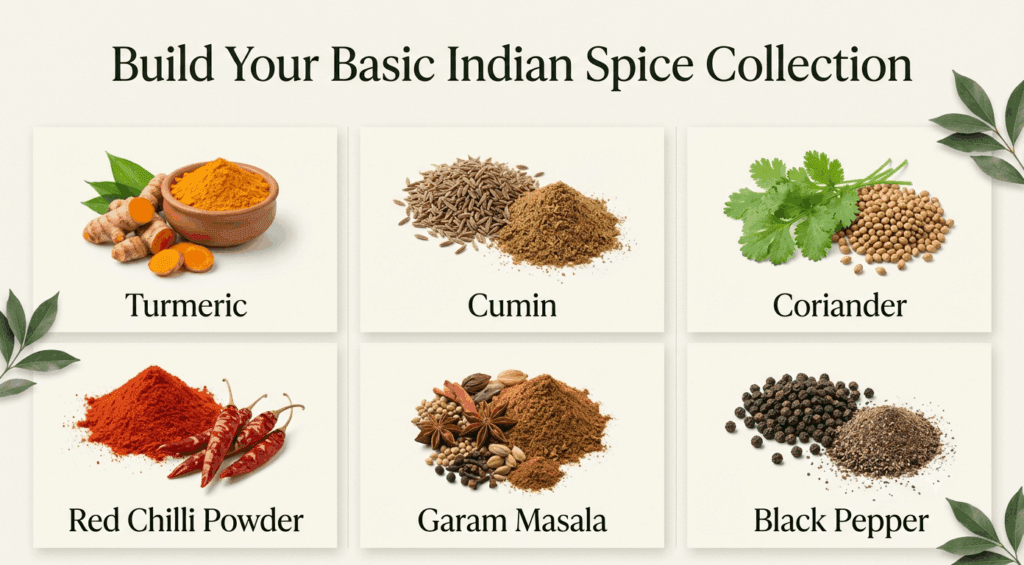
Both whole and ground spices have a useful place in the kitchen.
Whole spices generally keep their aroma longer when stored properly and are commonly used for tempering, roasting, or making fresh spice blends. Examples include cumin seeds, mustard seeds, cardamom, cloves, and cinnamon.
Ground spices are more convenient for everyday cooking because they can be added directly to a dish. Turmeric, coriander, chilli, and many spice blends are commonly used in powdered form.
For a broader comparison, understanding the difference between whole spices and ground spices can help you decide which form suits your cooking habits.
Good storage can make a noticeable difference to the flavor and aroma of spices.
Keep spices in clean, airtight containers and store them in a cool, dry place. Avoid placing them directly above the stove because heat and steam can affect their quality.
Always use a dry spoon when taking spices from their containers. Moisture can cause powdered spices to clump and may affect their freshness.
It is also useful to check older spices before using them. A weak aroma, faded color, or stale smell can indicate that a spice has lost much of its flavor. For general food storage guidance, you can refer to the USDA FoodKeeper guide.
Yes. These spices are not limited to Indian recipes.
Turmeric can be used in soups and roasted vegetables, cumin works well with beans and grains, coriander can season marinades and sauces, and black pepper is useful in almost any savory dish.
Using familiar spices in different cuisines can also help you understand how each one behaves and which flavors work well together.
You do not need a large spice collection to make flavorful Indian food. A few essentials turmeric, cumin, coriander, red chilli powder, garam masala, and black pepper can provide a strong foundation for everyday cooking. Each brings something different, from earthy warmth and color to heat and aroma.
Start with the spices you use most often, store them away from heat and moisture, and gradually expand your collection as you try new recipes. Once you understand the role of each spice, it becomes easier to adjust flavors and create balanced dishes without depending entirely on recipes.
The most useful Indian spices for a basic kitchen include turmeric, cumin, coriander, red chilli powder, garam masala, and black pepper. These can be used in many everyday dishes.
A beginner can start with turmeric, cumin, coriander powder, and red chilli powder. Garam masala and black pepper can be added next for more variety.
Cumin has a warm, earthy, and nutty flavor, while coriander has a milder, slightly citrusy and earthy taste. They are often used together in Indian cooking.
No. Garam masala is a blend of several spices. Its ingredients vary by recipe and region, but it commonly contains spices such as cumin, coriander, cardamom, cinnamon, cloves, and black pepper.
Store spices in airtight containers in a cool, dry place away from direct sunlight, heat, and moisture. Use dry spoons when handling them.
Check the aroma, color, texture, and flavor. Fresh spices generally have a noticeable natural aroma and characteristic flavor. Discard spices showing visible mould, insects, contamination, or other signs of spoilage. The spice freshness guide provides additional information.
At Orowma, we bring authentic Indian flavors to your kitchen with carefully crafted spices and masalas. Made using traditional recipes and quality ingredients, our range includes spice powders, blended masalas, and whole
Get Started Now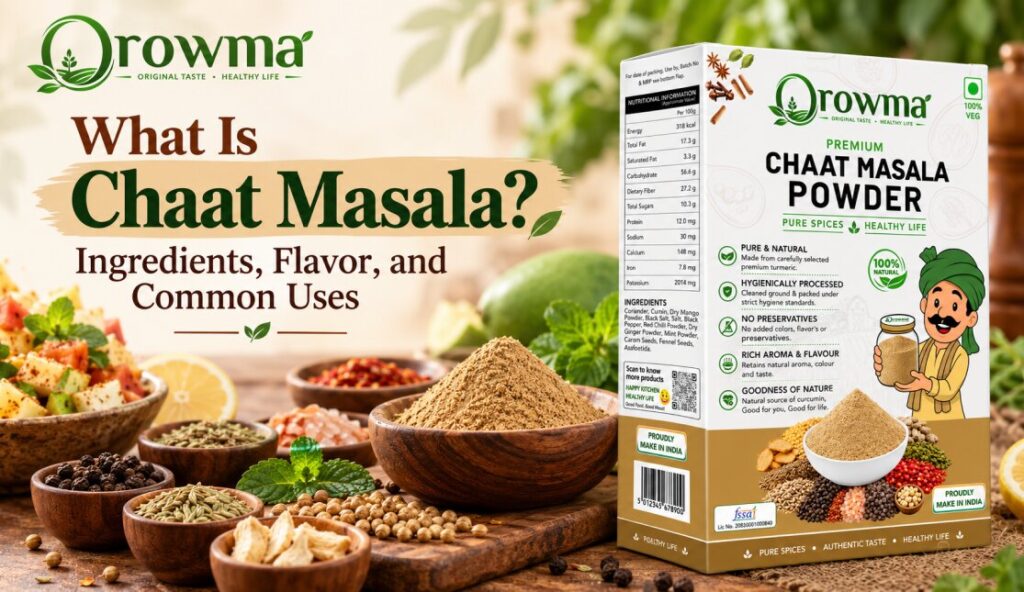
Date: 30 October 2026
Date: 27 October 2026
Date: 25 October 2026
We use cookies to improve your browsing experience, analyze website traffic, and provide essential website functionality. You can accept all cookies, reject non-essential cookies, or manage your preferences.
Manage your cookie preferences. You can enable or disable different categories of cookies below.
Essential cookies enable basic functions and are necessary for the proper function of the website.
Marketing cookies are used to follow visitors to websites. The intention is to show ads that are relevant and engaging to the individual user.
Website security powered by MilesWeb
Login to continue to Orowma
Join Orowma today
Enter the 6-digit code sent to your email.