
What Is Chaat Masala? Ingredients, Flavor, and Common
Date: 30 October 2026
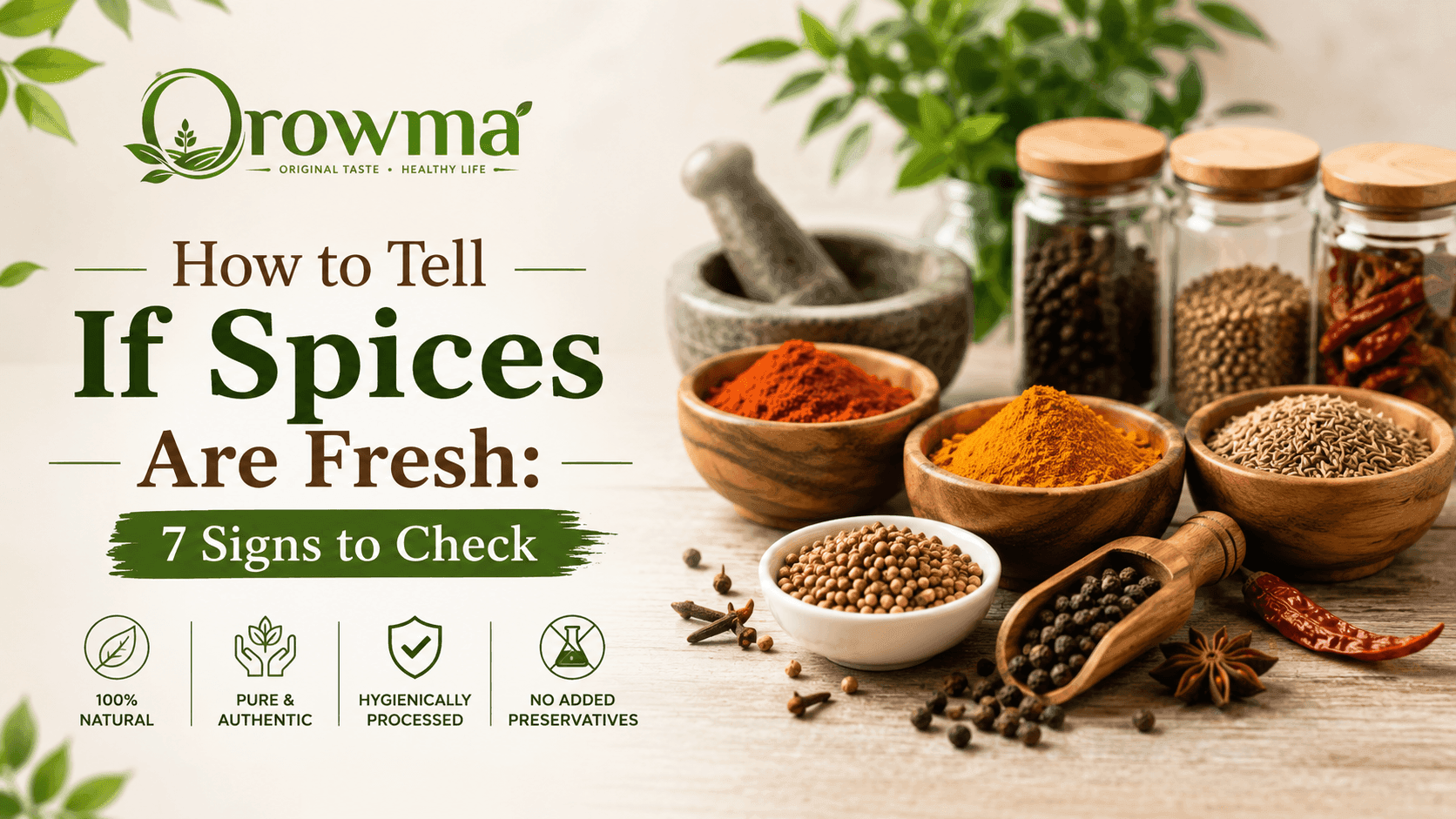
How to Tell If Spices Are Fresh is easier than you might think. Fresh spices usually have a noticeable natural aroma, characteristic colour, dry texture, and strong flavour. By checking these qualities, you can quickly determine whether a spice is still fresh and worth using.
Checking the best-before or expiry date is useful, but it does not tell the whole story. Spices can gradually lose their aroma and flavour because of air, heat, moisture, and light, even when they still look usable.
The good news is that you can check spice freshness with a few simple observations. From smell and colour to texture and storage conditions, these signs can help you decide whether a spice is still at its best or needs replacing.
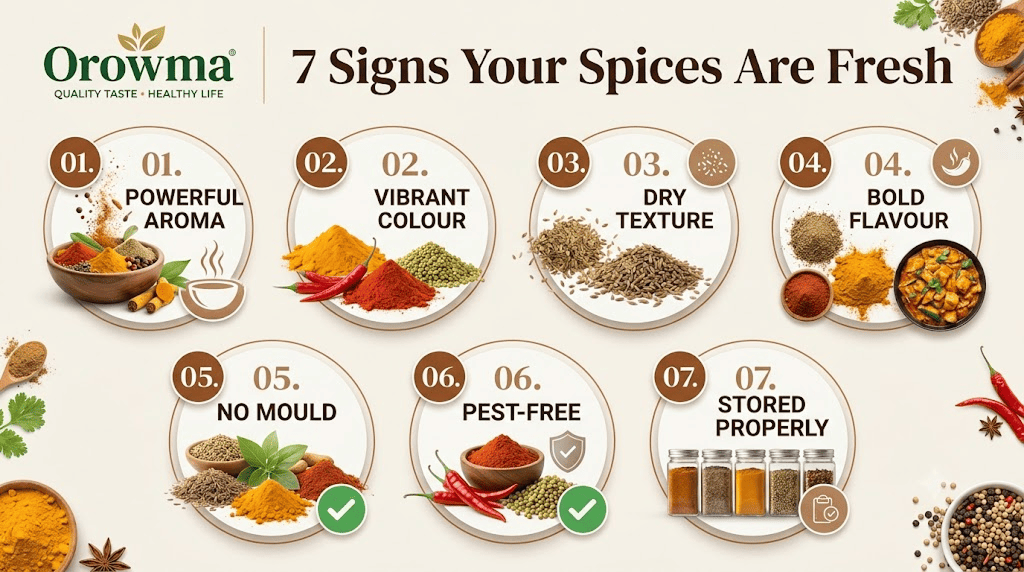
In this guide, we’ll cover 7 signs of fresh spices, including aroma, colour, texture, flavour, mould, pantry pests, and storage conditions. We’ll also explain the difference between whole spices and ground spices and how proper storage can help maintain spice quality.
Fresh spices usually have a noticeable natural aroma, characteristic colour, dry texture, and strong flavour. You can also check for mould, insects, moisture, unusual discolouration, and poor storage conditions. Whole spices generally retain their aroma and flavour longer than ground spices when stored properly.
The smell of a spice is one of the easiest ways to judge its freshness.
Fresh spices usually have a noticeable, natural aroma. Cumin should smell warm and earthy, while chilli should have a distinct spicy fragrance. If you open a jar and the spice has very little smell, it may have lost some of its natural aromatic oils.
For whole spices, rub or lightly crush a small amount between your fingers before smelling it. This releases more of the natural oils and makes the aroma easier to notice.
For example, Premium Cumin Seeds should have the characteristic warm and earthy aroma associated with cumin.
A fresh spice should generally have:
A weak aroma does not necessarily mean the spice is unsafe. It usually means the spice has lost some of its flavour and quality.
Colour is another useful sign when checking fresh spices.
Spices can gradually lose their natural vibrancy as they age or are exposed to air and light. Turmeric, for example, is known for its characteristic yellow colour, while chilli powder generally has a natural red tone.
If you regularly use Turmeric Powder can be a useful example of the characteristic colour expected from turmeric powder.
However, colour alone should not determine freshness. Natural colour can vary depending on the spice variety, growing conditions, and processing method. Check the colour along with aroma and texture for a better assessment.
Fresh ground spices should generally be dry and easy to scoop or sprinkle. Hard, persistent lumps can indicate that the powder has absorbed moisture.
A few small clumps do not always mean a spice has gone bad. But if the powder feels damp, sticky, or unusually hard, check it more carefully before using it.
Moisture is particularly important because it can affect the quality of stored spices.
Keep spice jars away from:
Always use a clean, dry spoon and close the container after use.
For ground spices such as Premium Coriander Powder, keeping the package tightly sealed can help protect its aroma and texture.
If a spice looks and smells normal but you are still unsure about its freshness, its flavour can provide another clue.
Fresh spices usually have a noticeable flavour that matches their natural character. Older spices may taste flat, weak, or less intense.
For example, cumin should have a warm, earthy taste, while red chilli should provide its expected heat and flavour. If a spice has very little flavour despite using the usual amount, it may simply have lost some of its quality.
You only need a tiny amount for this check.
Do not taste a spice if you see mould, insects, visible contamination, moisture-related spoilage, or other signs that it may be unsafe.

Mould is a clear warning sign.
Look carefully at older spice containers, especially if they have been exposed to humidity. Watch for fuzzy growth, unusual spots, unexpected colour changes, or anything that does not look normal for the spice.
If you notice visible mould, do not simply remove the affected portion and continue using the rest. It is safer to discard the contaminated spice.
Freshness and purity are related but not exactly the same thing. If you also want to learn how to identify possible adulteration, read Orowma’s guide to checking spice purity at home.
Spices can sometimes be affected by pantry pests, particularly when containers are not sealed properly.
Check for:
If you find signs of infestation, discard the affected spice rather than trying to remove the insects manually. Also inspect nearby dry foods because pantry pests can spread between containers.
Airtight packaging and a clean, dry storage area can help reduce the risk of pantry pests.
The best-before or expiry date is an important reference, but it should not be your only freshness test.
Spices gradually lose aroma and flavour during storage. Whole spices generally retain their quality longer than ground spices because grinding exposes more surface area to air.
The USDA Food Safety and Inspection Service recommends keeping shelf-stable foods in a cool, dry place and following appropriate storage guidance to maintain quality.
Store your spices away from:
If you enjoy stronger, freshly ground-style flavours, whole spices such as Premium Cumin Seeds can be a practical choice because they generally retain their characteristic aroma better than ground spices when stored correctly.
In general, whole spices stay flavourful for longer than ground spices. Grinding increases the surface area exposed to oxygen, which can speed up the loss of aromatic compounds.
That does not mean ground spices are poor quality. They are convenient and essential for many recipes. The key is to buy quantities you can use while the flavour and aroma are still strong and store them properly.
For everyday cooking, products such as Red Chilli Powder and Garam Masala Powder should be kept tightly sealed after every use.
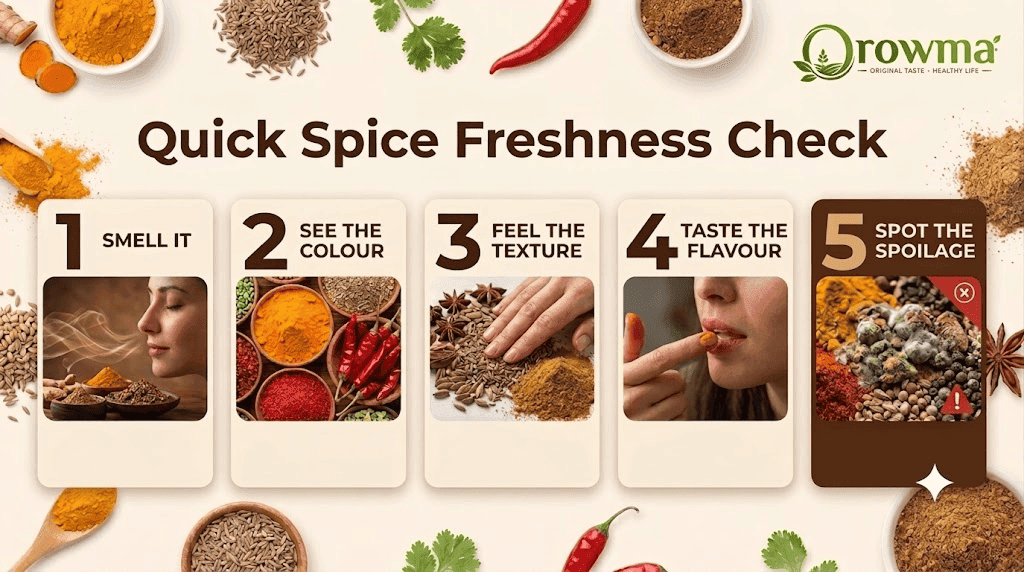
Use this simple four-point check:
If several of these signs indicate poor quality, replacing the spice is usually the better option.
For more tips on selecting quality spices, you can also read Orowma’s complete guide to choosing pure spices.
Checking spice freshness is simple once you know what to look for. Start with the aroma, then check the colour and texture. If the spice still looks and smells normal, a small taste can help you judge whether it has retained its characteristic flavour.
Always discard spices that show mould, insects, contamination, or other clear signs of spoilage.
Good storage also helps preserve spice quality for longer. Choose quantities you can use while the spices are still aromatic, keep containers tightly sealed, and protect them from heat, steam, light, and moisture.
With these simple checks, you can make better decisions about the spices in your kitchen and make sure every pinch adds the flavour and aroma your food deserves.

Check their aroma, colour, texture, and flavour. Fresh spices usually have a noticeable natural smell and characteristic taste. Also look for moisture, mould, insects, or unusual changes.
Yes, spices can have best-before or expiry dates. However, their aroma and flavour can decline gradually during storage, so freshness should be judged using more than the printed date.
Old spices may simply have weaker flavour. However, discard them if they show mould, insects, contamination, an unusual smell, or other signs of spoilage.
Whole spices generally retain their aroma and flavour longer because less surface area is exposed to air. Ground spices tend to lose their aromatic qualities faster.
Keep spices in tightly sealed containers in a cool, dry, dark place. Keep them away from sunlight, steam, heat, and moisture.
There is no single freshness period for every spice. Storage conditions, whether the spice is whole or ground, packaging, and exposure to heat, air, light, and moisture all affect how long it retains its best aroma and flavour.
A faded colour may indicate that a spice has lost some of its quality, but colour alone does not determine whether it is safe. Check the aroma, texture, storage conditions, and any signs of mould or contamination before deciding whether to use it.
At Orowma, we bring authentic Indian flavors to your kitchen with carefully crafted spices and masalas. Made using traditional recipes and quality ingredients, our range includes spice powders, blended masalas, and whole
Get Started Now
Date: 30 October 2026
Date: 27 October 2026

Date: 25 October 2026
We use cookies to improve your browsing experience, analyze website traffic, and provide essential website functionality. You can accept all cookies, reject non-essential cookies, or manage your preferences.
Manage your cookie preferences. You can enable or disable different categories of cookies below.
Essential cookies enable basic functions and are necessary for the proper function of the website.
Marketing cookies are used to follow visitors to websites. The intention is to show ads that are relevant and engaging to the individual user.
Website security powered by MilesWeb
Login to continue to Orowma
Join Orowma today
Enter the 6-digit code sent to your email.