
What Is Chaat Masala? Ingredients, Flavor, and Common
Date: 30 October 2026

Turmeric powder is a staple in many Indian kitchens. Also known as haldi, it gives food its familiar golden color while adding a mild earthy flavor. You can use it in much more than just curry. A pinch works well in dal, rice, vegetables, khichdi, marinades, soups, and several other everyday dishes. The trick is not to use too much. Turmeric has a distinct taste, so a small amount is usually enough to bring color and warmth without taking over the dish.
Open an Indian spice box and turmeric is almost always there. Its bright yellow color makes it easy to spot, but its real value comes from how easily it fits into everyday cooking. Whether you are making a quick dal, sautéing potatoes, preparing rice, or cooking a vegetable curry, a little turmeric can make the dish look and taste more complete.
If you have ever wondered how to use turmeric beyond the usual curry, there are plenty of simple options. You do not need special recipes or complicated techniques. Here are ten practical turmeric powder uses that can easily become part of your regular cooking routine.
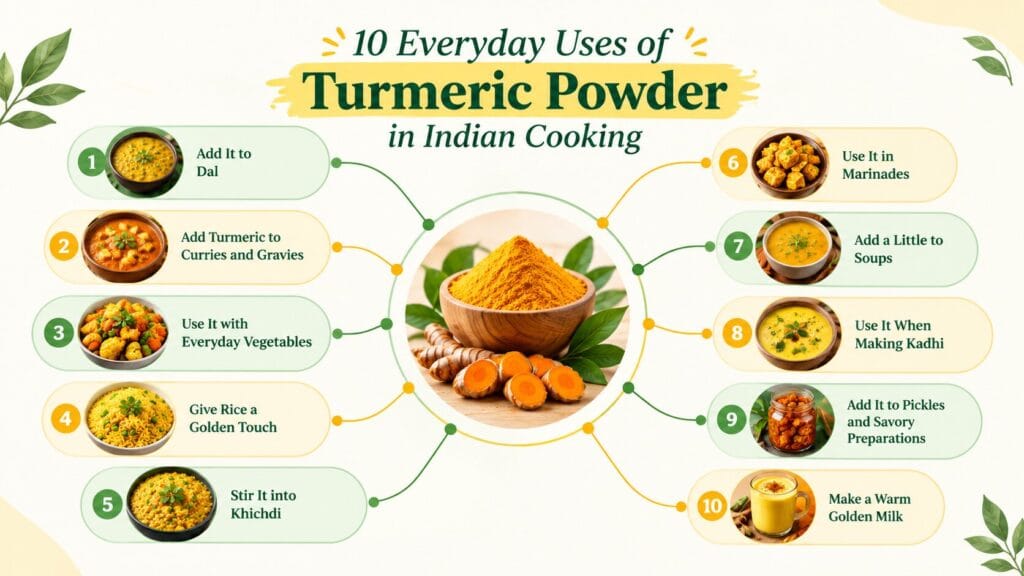
Dal is probably one of the simplest places to start. Add a small amount of turmeric while cooking moong dal, masoor dal, toor dal, or another lentil of your choice.
It gives the dal that familiar yellow-golden appearance and adds a gentle earthy note. Once the dal is cooked, finish it with a tadka of cumin, garlic, dried chilli, or ghee.
If you are building your basic spice collection, this guide to essential Indian spices can help you understand which spices commonly work together.
Turmeric is a familiar part of many Indian curry bases. It can be used with potato curry, chickpeas, beans, paneer, mixed vegetables, and countless regional recipes.
Usually, turmeric goes into the pan along with other powdered spices. It blends particularly well with coriander powder, red chilli powder, ginger, and garlic.
The important thing is balance. Turmeric should support the other flavors rather than become the main taste of the curry.
For a closer look at different spices and how they are used, see this guide to Indian spices, their names, uses, and flavors.
A little turmeric can make a simple vegetable dish more appealing. Try it with potatoes, cauliflower, cabbage, carrots, peas, beans, spinach, or mixed vegetables.
For a dry sabzi, add turmeric after the vegetables have started cooking. You can then add cumin, coriander, chilli, or other spices depending on the recipe.
This is one of the easiest ways to include turmeric in Indian cooking because it does not require changing your usual recipe.
Turmeric works surprisingly well in rice dishes. A small pinch can be added to vegetable rice, pulao, or other lightly seasoned rice preparations.
It pairs nicely with cumin, peas, carrots, and whole spices. Just remember that rice has a relatively mild flavor, so too much turmeric can make the dish taste slightly bitter or earthy.
Turmeric is also commonly paired with rice and lentils in Indian-style dishes. For example, the USDA MyPlate Masoor Dal recipe uses turmeric powder along with cumin and chilli peppers.
Khichdi is another natural match for turmeric. Add it while the rice and lentils are cooking, along with salt and other seasonings.
The result is a warm golden color and a mild earthy flavor that works particularly well with cumin, ginger, vegetables, and a little ghee.
Since khichdi is generally a mild dish, there is no need to add a large amount. Start small and adjust if needed.
If you regularly cook Indian meals at home, Orowma’s Indian Cooking Essentials brings together several common kitchen staples.
Turmeric can also be used in marinades for paneer, tofu, vegetables, and other ingredients.
For a simple marinade, combine turmeric with yogurt, ginger, garlic, lemon juice, salt, and a few other spices. Coat the ingredients well and let them rest before grilling, roasting, or pan-cooking.
The turmeric gives the marinade a warm color and works particularly well with other Indian spices.
There is no rule saying turmeric has to stay in Indian recipes. Try adding a small amount to lentil soup, tomato soup, vegetable soup, or bean soup.
It gives the soup a gentle golden color and earthy warmth. Because soups often have lighter flavors, start with just a pinch and taste before adding more.
Kadhi is another traditional Indian dish where turmeric has a natural place. A small amount can be mixed into the yogurt and gram-flour mixture to give the kadhi its characteristic yellow color.
The exact ingredients vary from one regional version to another. Some recipes use cumin, ginger, curry leaves, fenugreek, or chilli, giving the dish its own distinct character.
Turmeric is also used in a variety of Indian pickles and savory preparations. It works alongside ingredients such as mustard seeds, chilli, salt, and other spices.
Here, the amount matters even more because pickle recipes often have carefully balanced proportions. Follow the recipe rather than adding turmeric simply by appearance.
Turmeric can also be used in a warm milk drink often referred to as golden milk. A small amount of turmeric can be stirred into warm milk along with ingredients such as ginger, black pepper, or other spices.
It is best to keep the quantity modest. Too much turmeric can make the drink taste strong and slightly bitter.
There is no fixed amount that works for every dish. It depends on what you are cooking, how much food you are making, and how strong you want the flavor to be.
For a typical family-sized preparation, around ¼ to ½ teaspoon can be a useful starting point, but this is only a general cooking guide. A large pot of dal may need more than a small vegetable dish, while delicate recipes may need very little.
When in doubt, start with less. You can always add a little more, but it is difficult to correct a dish that has become too strongly flavored.
If you are choosing turmeric for regular cooking, you can explore Orowma’s turmeric powder as one option.
Turmeric is usually added while the dish is cooking. This gives it time to blend with the other ingredients and distribute its color evenly.
Ground spices can burn quickly. If you are adding turmeric to hot oil with other powdered spices, keep the heat moderate and stir it rather than leaving it in the pan for too long.
Turmeric does not need to do all the work. Cumin, coriander, ginger, garlic, chilli, and black pepper can bring additional aroma and depth to the dish.
Keep turmeric powder in a tightly sealed container in a cool, dry cupboard. Avoid storing it next to the stove where heat and steam can affect the powder.
If you want to check how storage can affect different spices, this guide on how long spices last offers useful information.
Turmeric powder is one of those ingredients that earns its place in the kitchen because it is so easy to use. A small amount can add color and earthy warmth to dal, curry, vegetables, rice, khichdi, marinades, soups, and many other dishes.
You do not need to follow complicated recipes to make good use of it. Start with a small quantity, combine it with spices that complement its flavor, and adjust according to the dish. Once you get familiar with how turmeric behaves during cooking, it becomes an easy ingredient to reach for whenever a meal needs a little extra color and character.

The most common uses include adding turmeric to dal, curries, vegetable dishes, rice, khichdi, marinades, soups, kadhi, pickles, and warm milk drinks.
Add a small amount while cooking dal, curry, vegetables, rice, or other dishes. It is usually added with the other spices so its color and flavor can spread evenly through the food.
Yes. Turmeric is commonly called haldi in Hindi and several other Indian languages.
Yes. A small pinch of turmeric can be added to pulao, vegetable rice, khichdi, and other rice dishes. It gives the rice a warm golden color and mild earthy flavor.
Turmeric is generally added while preparing the curry base, usually along with other powdered spices. This allows it to blend with the onions, tomatoes, vegetables, or other ingredients.
For a typical family-sized pot of dal, around ¼ to ½ teaspoon can be a reasonable starting point. The exact amount depends on the quantity of dal and your preferred flavor.
Store it in an airtight container in a cool, dry place away from direct sunlight, heat, steam, and moisture. Always use a clean, dry spoon when taking out the powder.
Yes. Turmeric can be added to soups, marinades, roasted vegetables, rice dishes, sauces, and other recipes where its mild earthy flavor and golden color work well.
At Orowma, we bring authentic Indian flavors to your kitchen with carefully crafted spices and masalas. Made using traditional recipes and quality ingredients, our range includes spice powders, blended masalas, and whole
Get Started Now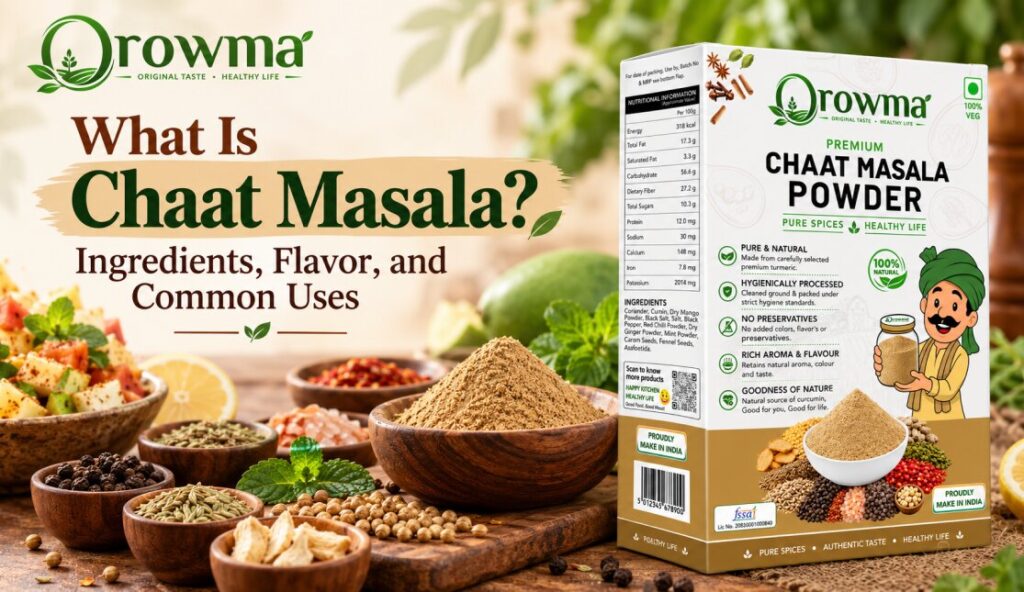
Date: 30 October 2026
Date: 27 October 2026
Date: 25 October 2026
We use cookies to improve your browsing experience, analyze website traffic, and provide essential website functionality. You can accept all cookies, reject non-essential cookies, or manage your preferences.
Manage your cookie preferences. You can enable or disable different categories of cookies below.
Essential cookies enable basic functions and are necessary for the proper function of the website.
Marketing cookies are used to follow visitors to websites. The intention is to show ads that are relevant and engaging to the individual user.
Website security powered by MilesWeb
Login to continue to Orowma
Join Orowma today
Enter the 6-digit code sent to your email.