
What Is Chaat Masala? Ingredients, Flavor, and Common
Date: 30 October 2026
Wondering how long do spices last? Whole spices generally last longer than ground spices, while spice blends may lose flavour sooner. This guide explains spice shelf life, how to tell when spices have lost freshness, and the best ways to store them, with practical tips to protect spices from heat, light, air, and moisture.
Open any kitchen cabinet and you’ll likely find a few spice jars that have been sitting there for years, quietly losing their flavour. Spices don’t spoil the way milk or meat does, but they do lose potency over time, and using tired spices can leave even a well-planned recipe tasting flat.
So, how long do spices last exactly? The answer depends on whether you’re using whole spices, ground spices, or spice blends, how they’re stored, and how often the container gets opened. This guide breaks down realistic shelf-life expectations, signs of fading freshness, and simple storage habits that help you keep your Indian spices online flavourful for as long as possible.
Spices rarely “expire” in the sense of becoming immediately unsafe to eat. Because most are dried and low in moisture, they don’t support bacterial growth the way highly perishable foods do.
What usually happens is a slow loss of the essential oils that give spices their aroma, colour, and flavour. Over time, exposure to air, light, heat, and moisture causes these oils to evaporate or oxidise.
The spice may still be usable, but it can become duller, weaker, and less able to add depth to a dish. This is the core idea behind spice freshness: it’s mainly about flavour strength and quality, not safety.
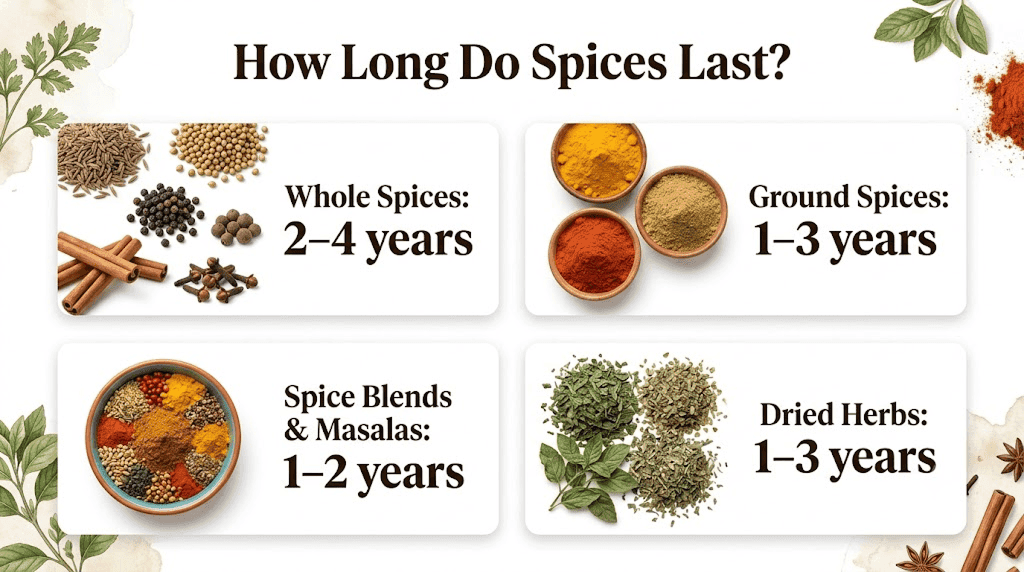
There’s no single number that applies to every spice, since shelf life varies by form and type. Here’s a general guide.
Whole spices—such as cinnamon sticks, cloves, cumin seeds, black peppercorns, and cardamom pods—generally have the longest shelf life.
Because their outer structure hasn’t been broken down, the essential oils inside are better protected from oxidation. Most whole spices stay flavourful for around 2 to 4 years when stored properly. Some, such as whole nutmeg and cinnamon bark, may retain their quality for even longer.
Ground spice shelf life is noticeably shorter because grinding exposes much more surface area to air, light, and humidity.
Powders such as turmeric powder, red chilli powder, coriander powder, and garam masala typically retain their best flavour for around 1 to 3 years. After that, they don’t necessarily become harmful, but their aroma, colour, and intensity can gradually fade.
Pre-mixed spice powders and masala blends generally fall on the shorter end of the scale, often retaining their best quality for around 1 to 2 years.
Blends contain multiple ingredients, and some components may lose their flavour faster than others. As a result, the overall quality of the blend can gradually decline over time.
If you regularly use different masalas and seasonings in your cooking, buying practical quantities through spice combo offers can help you avoid storing more than you can realistically use.
Dried herbs such as oregano, thyme, and bay leaves usually last around 1 to 3 years, depending on how they are stored. Like spices, they gradually lose their aroma and flavour rather than suddenly becoming unusable.
Since spices don’t always visibly spoil, you often need to rely on your senses rather than an expiry date alone.
If you’re unsure whether a spice has simply lost freshness or was poor quality to begin with, it can also help to learn how to check spice purity at home.
Proper storage is one of the biggest factors affecting how long spices remain flavourful.
Store spices in a cool, dark cupboard or drawer rather than on an open rack beside the stove. Heat and direct sunlight can speed up the breakdown of the compounds responsible for flavour and aroma.
Every time a spice container is left open or poorly sealed, air and moisture can enter.
Airtight glass or metal containers can help protect spices from humidity and preserve their aroma for longer. Always make sure the lid is properly closed after use.
Buying large quantities that sit unused for years isn’t always the best value. Purchasing practical amounts more frequently can help ensure you’re cooking with spices while they still have good aroma and flavour.
If you’re looking to buy spices online, choosing products in quantities that suit your regular cooking needs can help reduce unnecessary storage and waste. You can also explore Orowma’s range of spice products and choose the varieties you use most often.

Keeping spices close to the stove may be convenient, but constant exposure to heat and steam can shorten their usable life.
A closed cupboard away from direct heat is usually a better option.
Since whole spices generally last longer than ground versions, grinding small amounts as needed is one of the easiest ways to enjoy stronger flavour.
A mortar and pestle or spice grinder can be used to prepare fresh quantities for cooking. If you’re deciding which option suits your kitchen better, this guide on whole spices vs ground spices explains the key differences and trade-offs.
Spices don’t always have a strict flavour expiration point, but they do have a period during which they taste and smell their best. Whole spices generally last the longest, while ground spices and blends tend to lose their potency sooner. Proper storage—cool, dark, dry, and airtight—can help preserve their quality for longer.
The simplest way to keep your cooking consistently flavourful is to store spices properly, buy sensible quantities, and replace products that have lost their aroma or colour. Starting with fresh, well-sourced spices from Orowma can also help give your everyday cooking a stronger foundation from the start.

Yes, in many cases. Older spices are generally still usable if they have been stored properly and show no signs of mould or contamination. However, they may no longer provide much flavour or aroma.
Generally, no. Refrigeration can sometimes introduce condensation and moisture, especially when containers are repeatedly moved in and out. A cool, dry, dark cupboard is usually the better choice.
Whole spices typically last considerably longer because less surface area is exposed to air and moisture.
Check its smell, colour, and flavour. A weak aroma, faded colour, or flat taste are common signs that a spice has lost much of its potency.
At Orowma, we bring authentic Indian flavors to your kitchen with carefully crafted spices and masalas. Made using traditional recipes and quality ingredients, our range includes spice powders, blended masalas, and whole
Get Started Now
Date: 30 October 2026
Date: 27 October 2026
Date: 25 October 2026
We use cookies to improve your browsing experience, analyze website traffic, and provide essential website functionality. You can accept all cookies, reject non-essential cookies, or manage your preferences.
Manage your cookie preferences. You can enable or disable different categories of cookies below.
Essential cookies enable basic functions and are necessary for the proper function of the website.
Marketing cookies are used to follow visitors to websites. The intention is to show ads that are relevant and engaging to the individual user.
Website security powered by MilesWeb
Login to continue to Orowma
Join Orowma today
Enter the 6-digit code sent to your email.