
What Is Chaat Masala? Ingredients, Flavor, and Common
Date: 30 October 2026
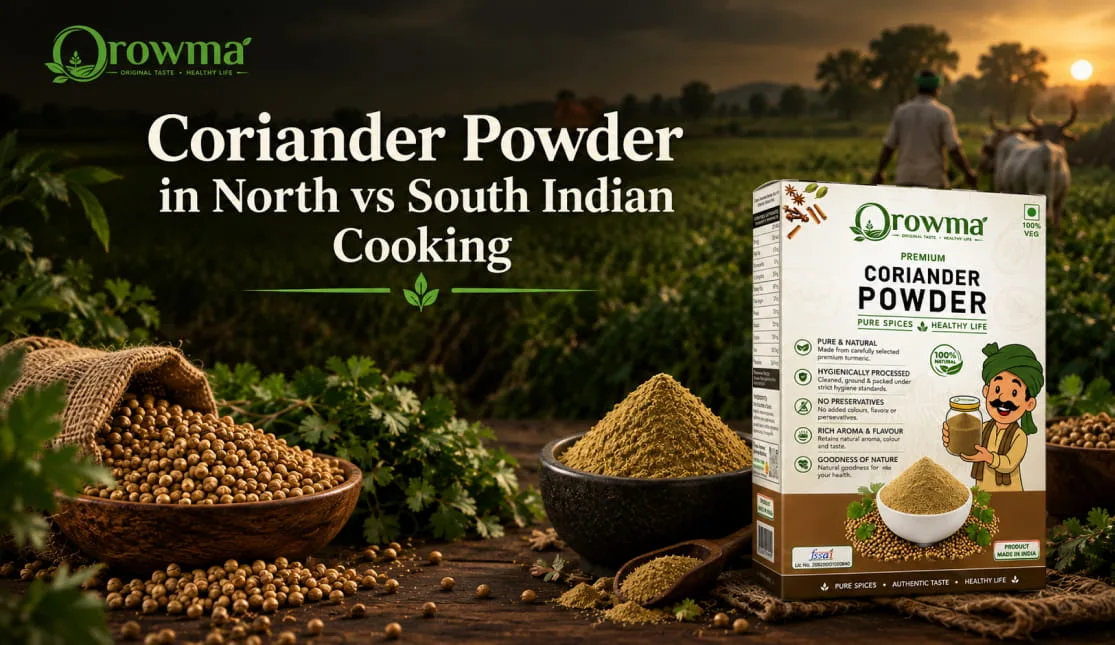
Coriander powder, also known as dhania powder, is used across India, but its role changes with regional cooking styles. In North Indian cooking, it commonly forms part of the masala base for curries, dals, sabzis, gravies and marinades. In South Indian cooking, coriander is often combined with roasted spices, curry leaves, dried chillies, lentils and ingredients such as tamarind. The spice itself remains the same, but cooking methods and combinations create different flavour profiles. Understanding these regional differences can help you use coriander powder more effectively in everyday Indian cooking.
Coriander powder is one of the most commonly used spices in Indian kitchens. Made by grinding dried coriander seeds, it adds a warm, earthy and mildly citrusy flavour to cooked food.
So, what is the difference between coriander powder uses in North and South Indian cooking?
The main difference is not the coriander itself but how it is combined with other ingredients and when it is added during cooking. North Indian cuisine often uses dhania powder as part of a masala base for gravies, dals and sabzis. South Indian cuisine frequently uses coriander as part of roasted spice blends, sambar preparations, rasam variations and vegetable dishes.
For a broader look at coriander, cumin, turmeric and other commonly used Indian spices, you can also explore Orowma’s guide to Indian spices, their uses and cooking tips.
These are broad patterns rather than strict rules because Indian regional cooking varies greatly from one state and household to another.
Coriander powder is made by grinding dried coriander seeds from the coriander plant, Coriandrum sativum. It is commonly known as dhania powder in Indian kitchens.
Unlike fresh coriander leaves, which are generally used for their fresh aroma and as a garnish, ground coriander seeds provide a deeper cooked-spice flavour.
The Spices Board of India lists coriander among India’s important spices and notes its use in curry powders, seasonings and food preparations.
For everyday cooking, dhania powder uses vegetable curries, dals, gravies, marinades, rice dishes and spice blends.
If you want to understand the difference between using coriander seeds and coriander powder, Orowma’s guide on whole spices Vs ground spices explains how the two forms differ in cooking and flavour.
In North Indian cooking, coriander powder often becomes part of the main masala rather than being used simply as a finishing spice.
It is commonly added while preparing an onion-tomato or other gravy base. Cooking it with ingredients such as cumin, turmeric, red chilli, ginger and garlic allows the flavours to blend into the dish.
Some familiar examples include:
A simple combination of coriander powder, cumin, turmeric and red chilli powder works as a useful base for many North Indian-style dishes.
These spices are also commonly found together in basic Indian kitchen spice collections. Orowma’s guide to essential Indian spices for everyday cooking covers the role of coriander, cumin, turmeric, red chilli and other commonly used spices.
For recipes where whole spices are used first, cumin seeds can be tempered in oil before the other masala ingredients are added.
The amount of coriander powder depends on the recipe. Too much can make a dish taste heavy, while too little may not provide enough body to the masala.
South Indian cuisine covers several regional traditions, including Tamil, Kerala, Karnataka, Andhra and Telangana cooking. Therefore, coriander powder is not used in exactly the same way everywhere.
One important role of coriander is in spice blends. Coriander seeds may be roasted with dried red chillies, cumin, lentils and other spices before being ground into a masala.
Common preparations where coriander can feature include:
Coriander can also work alongside ingredients such as curry leaves, mustard seeds, dried red chillies and tamarind. These combinations give many South Indian preparations a flavour profile that can be roasted, aromatic, tangy or chilli-forward.
This is why South Indian coriander may taste quite different in a dish compared with coriander used in a North Indian gravy. The coriander itself has not changed; the surrounding ingredients and cooking technique have.
Aspect | North Indian Cooking | South Indian Cooking |
Common role | Part of curry and gravy masalas | Spice blends and regional preparations |
Common pairings | Cumin, turmeric, chilli, garam masala | Dried chilli, curry leaves, mustard, cumin, lentils |
Cooking method | Often cooked into gravy or masala bases | Often roasted, tempered or blended |
Common dishes | Dal, chole, rajma, sabzi, paneer | Sambar, rasam, vegetable curries, spice blends |
Flavour profile | Warm, earthy and balanced | Often roasted, aromatic, tangy or chilli-forward |
Use of whole spices | Common in tempering and masala bases | Common in tempering and roasted spice blends |
This comparison should be viewed as a general guide, not a fixed division. For example, South Indian households may use coriander powder in everyday vegetable curries, while North Indian recipes can also use roasted coriander seeds in spice mixtures.
One of the easiest coriander powder uses is adding it to a regular vegetable sabzi.
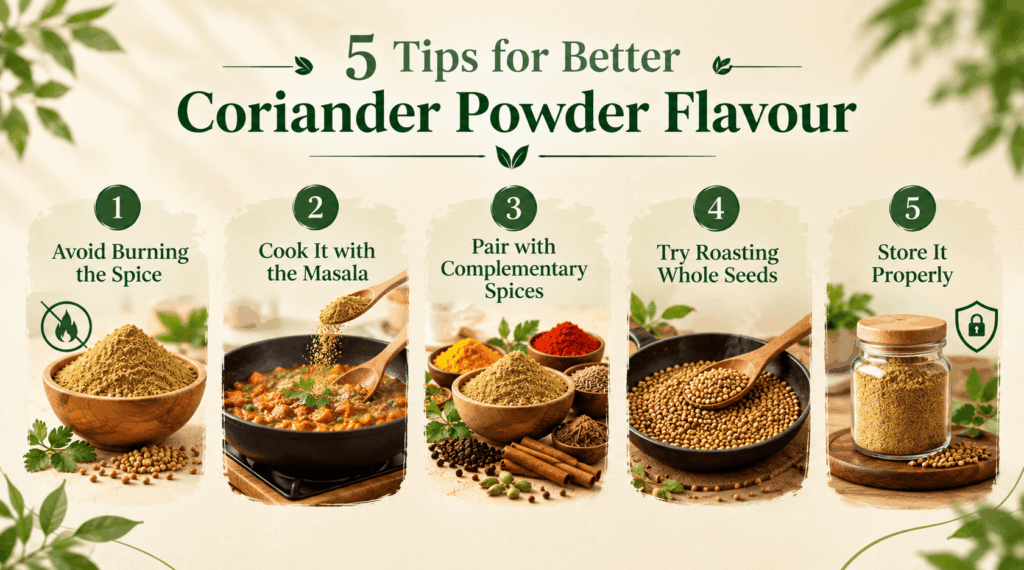
After sautéing onion, ginger or garlic, add your powdered spices and cook them briefly before adding the main ingredients. If the spices look dry, adding a small splash of water can help prevent them from burning.
For gravies, coriander powder can be added along with turmeric and chilli powder before adding water, stock or other liquid ingredients.
You can also use it when preparing a simple homemade masala. Combine coriander powder with cumin, turmeric and chilli according to the dish you are making.
For South Indian-style cooking, coriander can instead be part of a roasted spice mixture. Whole coriander seeds are particularly useful for this because they can be lightly roasted and ground with other spices.
For a basic Indian spice shelf, turmeric powder and red chilli powder can also be used alongside coriander in everyday masala preparations.
Coriander powder can develop a bitter taste if it is exposed to very high heat for too long. Cook it briefly with the masala and add liquid when required.
Adding coriander powder to a cooked masala base usually gives a more integrated flavour than simply sprinkling a large amount over a finished dish.
Cumin, turmeric and chilli are natural partners for coriander in many Indian recipes. The exact combination depends on the dish.
If you are preparing a homemade spice blend, lightly roasting whole coriander seeds before grinding can give the mixture a different aroma and depth.
Keep the powder in an airtight container and store it away from moisture, direct sunlight and excessive heat. This helps maintain its characteristic aroma for longer.
You can explore Orowma’s Indian spices collection when building a selection of everyday spices for your kitchen.
Coriander powder is a versatile ingredient that fits naturally into many regional Indian cuisines. In North Indian cooking, it is commonly used as part of masala bases for dals, curries, gravies and sabzis. In South Indian cooking, coriander can become part of roasted spice blends, sambar, rasam and vegetable preparations.
The important point is that there is no single “North Indian” or “South Indian” way to use coriander. Regional cooking is diverse, and the same spice can behave differently depending on the ingredients, cooking method and recipe.
Once you understand these coriander powder uses, it becomes easier to adjust the spice to suit everything from a simple weekday sabzi to a more elaborate regional preparation.
Coriander powder is commonly used in curries, gravies, dals, vegetable dishes, marinades, rice preparations and regional spice blends.
Yes. Dhania powder is the common Indian name for ground coriander seed powder.
It is commonly cooked into masala bases for dishes such as dal, chole, rajma, paneer and vegetable curries.
It can be used in sambar, rasam variations, vegetable curries and roasted spice blends, depending on the regional recipe.
Yes. Coriander and cumin are frequently combined in Indian cooking and work well in masalas for curries, dals and vegetables.
Not completely. Coriander powder and fresh coriander leaves have different flavours and functions. Powder is mainly used as a cooked spice, while fresh leaves are commonly used for garnish and fresh aroma.
Yes. Regional cooking traditions differ considerably. Coriander may be roasted, tempered, blended into a masala or cooked directly into a gravy depending on the recipe.
At Orowma, we bring authentic Indian flavors to your kitchen with carefully crafted spices and masalas. Made using traditional recipes and quality ingredients, our range includes spice powders, blended masalas, and whole
Get Started Now
Date: 30 October 2026
Date: 27 October 2026
Date: 25 October 2026
We use cookies to improve your browsing experience, analyze website traffic, and provide essential website functionality. You can accept all cookies, reject non-essential cookies, or manage your preferences.
Manage your cookie preferences. You can enable or disable different categories of cookies below.
Essential cookies enable basic functions and are necessary for the proper function of the website.
Marketing cookies are used to follow visitors to websites. The intention is to show ads that are relevant and engaging to the individual user.
Website security powered by MilesWeb
Login to continue to Orowma
Join Orowma today
Enter the 6-digit code sent to your email.