
Common Mistakes to Avoid When Buying Spices Online
Date: 13 November 2026
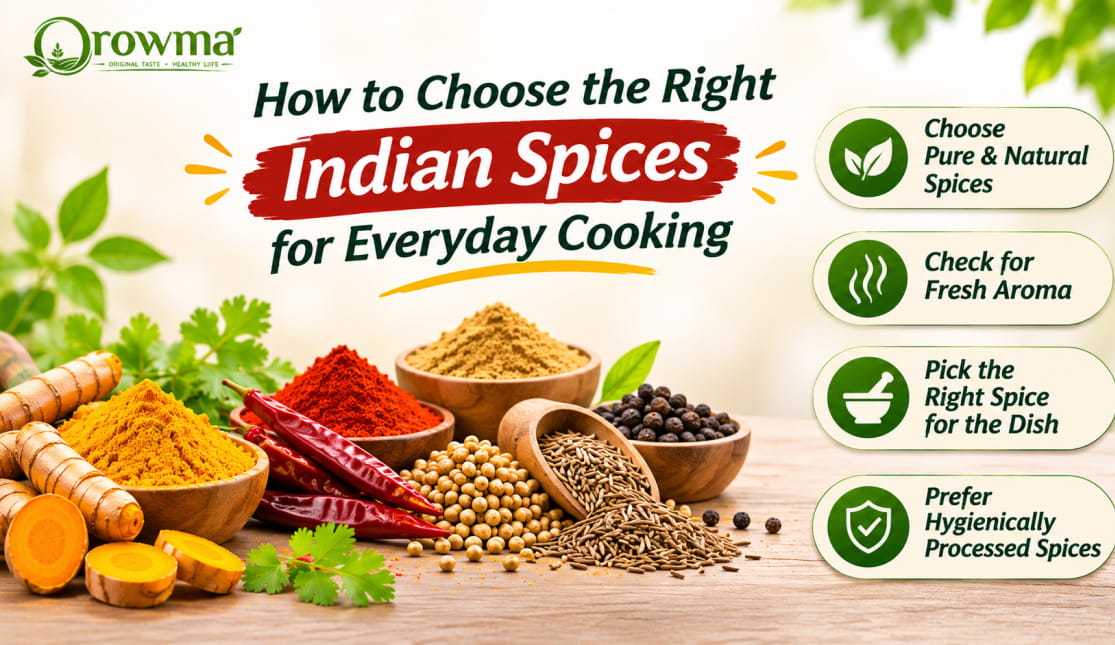
List three meals you cook often and circle the spices they share. Buy seeds for tadka and powders for dishes where the spice needs to mix in evenly. Choose pack sizes according to how many people you cook for and how often you reach for each spice.
Do you need both cumin seeds and cumin powder when you set up a kitchen? If you make dal tadka twice a week and raita only occasionally, one packet of seeds can do both jobs. You can roast and crush a spoonful whenever you make raita.
That small decision shows how to choose Indian spices for the way you cook. Think about what goes into your pan on an ordinary Tuesday. Your family’s poha, dal or potato sabzi will tell you more about the everyday spices you need than a ready-made starter kit.
Start with the spices that turn up in more than one dish on your weekly menu. For each one, note whether your recipe uses seeds, powder or a blend.
Suppose you often make moong dal, aloo gobi and jeera rice. Here’s how one household might season them.
Your first two purchases would be cumin seeds and turmeric. Cumin covers all three dishes, and turmeric covers two. Add coriander powder for the aloo gobi. Buy chilli powder if you like the heat and don’t already use fresh chillies for that dish.
When choosing Indian spices for mild food, adjust the ingredient that brings the heat. For a milder aloo gobi, leave out the red chilli powder on your first try. Keep the cumin for its toasted aroma and the coriander for its gentle, citrusy flavour. Taste a cooked floret before deciding whether to add a pinch of chilli.
Buy the spices for your most frequent tadka first, then pick the powders your dal and vegetables share. Use this table to match your spice selection to a dish you already know.
Spice | Flavour or purpose | Everyday dish | Form to buy |
Turmeric powder (haldi) | Earthy flavour and golden colour | Moong dal | Ground turmeric |
Cumin seeds (jeera) | Toasted aroma when warmed in ghee | Jeera rice | Whole seeds |
Coriander powder (dhania) | Mild, citrusy flavour that complements vegetables | Aloo gobi | Ground coriander |
Red chilli powder (lal mirch) | Adds heat that you can adjust by the pinch | Aloo matar | Ground chilli in your preferred heat level |
Mustard seeds (rai) | Nutty flavour when the seeds pop in oil | Kanda poha | Whole seeds |
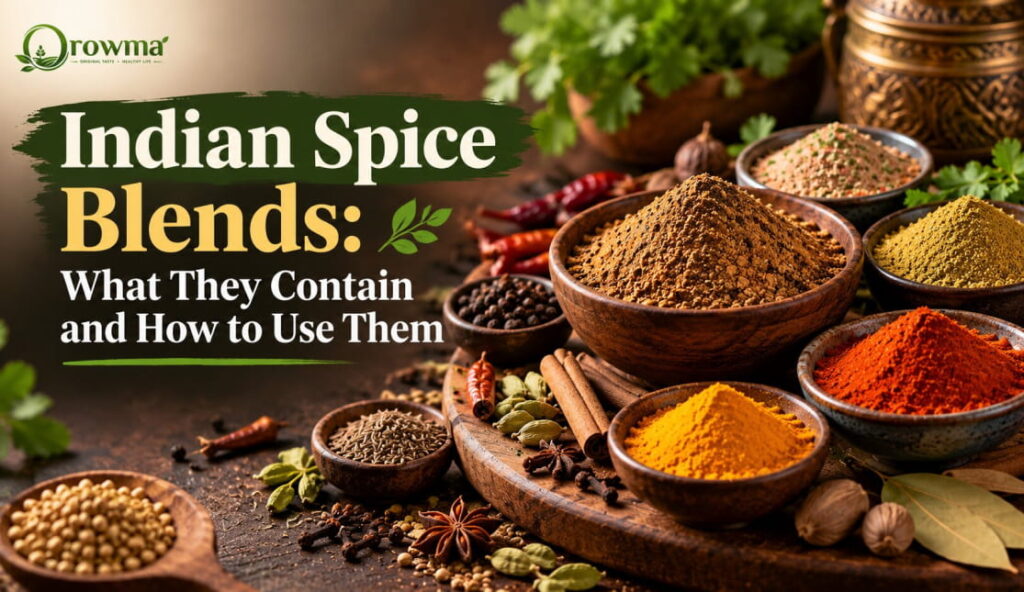
Garam masala | Adds a warm aroma near the end of cooking | Matar paneer | A small pack of ground blend |
Let regional and family preferences guide the order. If you make Maharashtrian-style poha with a mustard seed tadka most mornings, move mustard seeds to the top of your list. If your Punjabi-style sabzis often call for coriander powder, you may finish that packet first. Garam masala is a blend whose ingredients vary. Check whether the mix leans towards cumin and pepper or more fragrant spices such as cardamom and cloves.

Buy whole spices when your recipe starts by warming seeds in oil or ghee. Choose ground spices when you need their flavour to spread evenly through curd, gravy or vegetables. For more examples, see when to use whole or ground spices.
For dal tadka, choose whole cumin. Warm the seeds in ghee until they sizzle and smell fragrant, then pour the tadka over the dal. The seeds give each spoonful a little crunch. If dal is your regular meal, buy cumin seeds first. You can dry-roast a small spoonful, let it cool and crush it for your next bowl of raita.
For cucumber raita, roasted ground cumin stirs straight into the curd. Look for “roasted cumin powder” or “bhuna jeera” on the packet if that’s the flavour you want. If you make raita most days and seldom prepare a cumin tadka, the roasted powder is the better first purchase.

Check what the packet contains, how much you’re buying and whether the seal is intact. Online, zoom in on the back label before adding a masala to your basket.
For a single spice, look for a clear name such as “ground coriander”. For a blend, read the ingredient list, including any salt. Check the net weight, the packing or manufacturing date where shown, and the best-before or expiry information. Pick a sealed pack with legible dates and enough time for your household to use it. Leave a packet with a split seam or leaking powder on the shelf.
When a listing advertises pure Indian spices online, look for details you can actually check. Does the label identify the spice? Can you read the ingredients of the blend? Does the weight on the selected option match the packet you want? A bright red product photo cannot establish purity or tell you how hot a chilli tastes. If the label photo is unreadable, ask for a clearer one. Check the dates and seal on the pack you receive.
Choose a larger pack only when your household regularly finishes that quantity while the spice still smells fresh. How much goes into the pan matters as much as how often you cook.
For example, a family of four that uses a teaspoon of coriander powder in sabzi most days might try a 100 g pack. Someone cooking the same sabzi for one, twice a week, could start with 50 g. If you use only a pinch of garam masala in Sunday’s matar paneer, choose a 25 g pack if available. Even when 100 g costs less per gram, the smaller pack is better value if you would leave most of the larger one unused.
Before you shop, write three meals on your phone and check the masala dabba against that list. Beside each missing spice, note its form and pack size. An entry like “jeera, whole, 50 g” makes the choice easy when you reach the shelf.
Start with turmeric powder and the seeds you use for tadka. Cumin suits a simple moong dal and potato sabzi. Add coriander powder if your vegetable recipe uses it, and choose mustard seeds first if they go into your usual tempering.
Buy cumin seeds first if you often make dal tadka or jeera rice. You can roast and crush a small amount for raita. Choose roasted cumin powder first if you mainly season curd or chaas and want something you can stir straight in.
Choose cumin, coriander and turmeric according to the recipe, then adjust the chilli separately. For a mild potato sabzi, start with cumin seeds in oil and add ground coriander with the potatoes. Let anyone who enjoys more heat add chilli to their own serving.
You can cook plenty of meals with turmeric, cumin, coriander or mustard seeds alone. Buy garam masala when you regularly make a dish that calls for its aroma, such as matar paneer. Start with a small packet to see whether you like that particular blend.
Check the selected pack weight, spice form and readable label photos. For blends, look through the ingredients for salt or spices you prefer to avoid. On delivery, make sure the seal is intact and check the date printed on your packet.
At Orowma, we bring authentic Indian flavors to your kitchen with carefully crafted spices and masalas. Made using traditional recipes and quality ingredients, our range includes spice powders, blended masalas, and whole
Get Started Now
Date: 13 November 2026
Date: 11 November 2026
Date: 07 November 2026
We use cookies to improve your browsing experience, analyze website traffic, and provide essential website functionality. You can accept all cookies, reject non-essential cookies, or manage your preferences.
Manage your cookie preferences. You can enable or disable different categories of cookies below.
Essential cookies enable basic functions and are necessary for the proper function of the website.
Marketing cookies are used to follow visitors to websites. The intention is to show ads that are relevant and engaging to the individual user.
Website security powered by MilesWeb
Login to continue to Orowma
Join Orowma today
Enter the 6-digit code sent to your email.