
How to Choose the Right Indian Spices for
Date: 17 November 2026
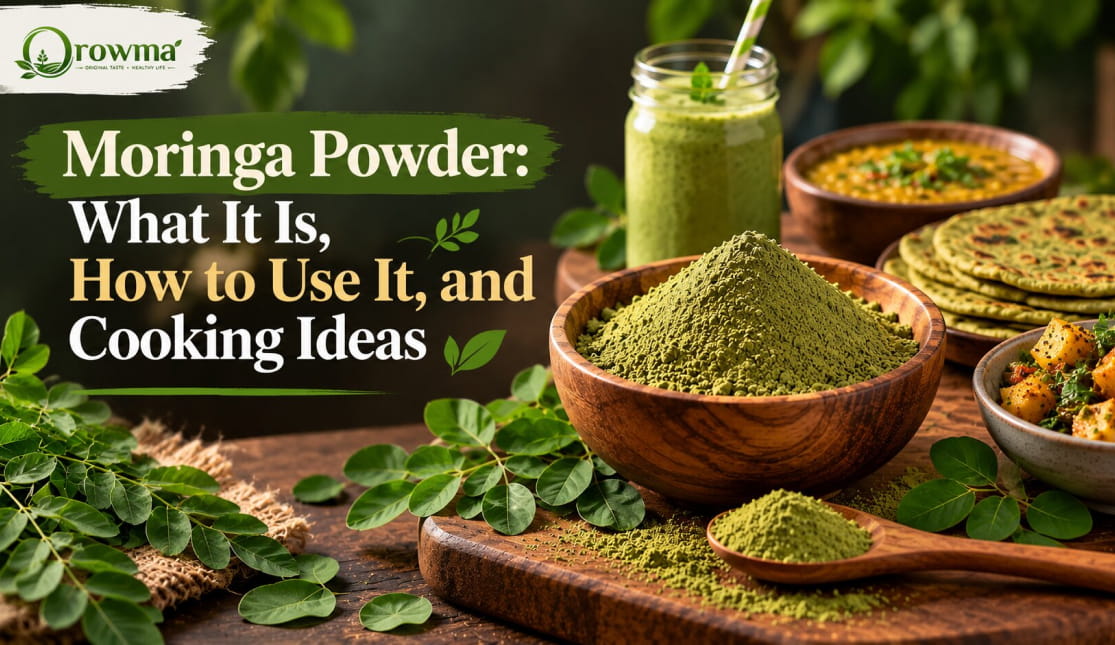
Moringa powder is made from dried moringa leaves that are ground into a fine, green powder. It has an earthy, leafy flavour that can be incorporated into selected everyday foods and drinks. From roti dough and dal to chutneys, vegetable dishes and smoothies, the key is to start with a small amount and balance its flavour with the other ingredients in your recipe.
Have you ever looked at a green ingredient and wondered how to use it without changing the taste of your favourite dishes too much? Moringa powder is one ingredient worth exploring if you enjoy experimenting with everyday cooking.
Made from dried moringa leaves, this fine green powder can be added to selected recipes in small quantities. However, its earthy flavour and leafy character mean that it may not suit every dish in the same way.
Knowing how to use moringa powder is less about adding it everywhere and more about choosing compatible ingredients, mixing it properly, and adjusting the quantity to suit your taste.
In this guide, we will explore practical moringa powder uses in Indian cooking, including roti, dal, chutney, sabzi and savoury batters. You will also find simple flavour-balancing tips, common mistakes to avoid, and advice on storing the powder properly.
Moringa powder, also known as moringa leaf powder, is prepared by drying moringa leaves and grinding them into a fine powder. It provides a convenient way to incorporate the leaves into different food preparations without handling fresh leaves each time.
Fresh moringa leaves contain more moisture and have a different texture from the dried powder. Fresh leaves may be cooked as a leafy vegetable or added to suitable dishes, while the powder can be mixed into doughs, batters, sauces and other preparations.
Because the powder is finely ground, it can distribute through a recipe without adding the same bulk as fresh leaves. However, its flavour can become noticeable when used generously, so choosing the right quantity matters.
Moringa powder has a characteristically earthy, grassy and leafy taste. Depending on the product and the amount used, it may also contribute a mild bitterness. These flavours can be noticeable in simple dishes with few ingredients, so it helps to consider the overall recipe before adding the powder.
In Indian cooking, onion, garlic, ginger, tomato, lemon and familiar seasonings may complement its earthy notes, depending on the preparation. If you want to understand how other ingredients contribute to everyday Indian dishes, explore this guide to Indian spices, their flavours and cooking uses.
The goal is not to hide the taste completely. Instead, choose ingredients that work well together and introduce moringa powder gradually. A small amount in a well-seasoned dish may be more appealing than a large quantity added all at once.
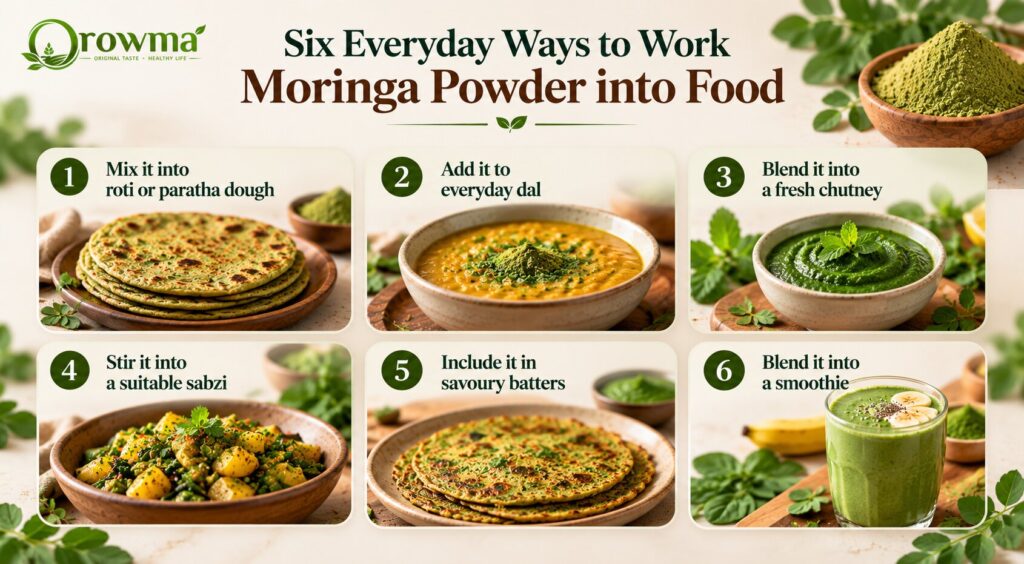
If you are exploring moringa powder uses for the first time, begin with familiar recipes. This makes it easier to understand how the powder affects the flavour and texture of your food.
Moringa powder can be incorporated into whole-wheat flour when preparing roti or paratha dough. Mix a small amount into the dry flour before adding water so that it distributes more evenly.
Knead the dough as usual and adjust the water according to its consistency. If you are trying it for the first time, prepare a small batch before adding it to the flour you use for the entire family.
Dal is a practical option because its texture allows the powder to be mixed into the preparation. Try adding a small amount to cooked moong dal or masoor dal during the later part of cooking.
Stir thoroughly and allow it to heat through gently. Taste the dal before adjusting the seasoning. Avoid adding the powder directly to smoking-hot tempering oil, as this can make even mixing difficult and may expose it to excessive heat.
A coriander or mint chutney can provide an interesting base for experimenting with moringa leaf powder. Add a small amount while blending the herbs, lemon juice and other ingredients.
Taste the chutney before adding more. The fresh herbs and acidity can complement the powder’s earthy flavour, but the final balance will depend on your ingredients and preferred level of bitterness.
You can experiment with moringa powder in selected vegetable dishes, especially preparations containing onion, tomato or other compatible ingredients.
Mix a small amount into the moist sabzi during the later part of cooking, then stir well so that the powder does not collect in one place. Begin with a recipe that already has a balanced flavour rather than a very mild vegetable preparation where the earthy taste may dominate.
Besan chilla and other savoury pancakes offer another way to explore moringa powder in cooking. Whisk a small amount into the gram flour before adding the liquid ingredients.
Mix the batter thoroughly to avoid green clumps and adjust its consistency as needed. Onion, coriander leaves, ginger and other familiar seasonings can be included according to your usual recipe. Cook the chilla as you normally would and assess the flavour before increasing the amount next time.
Moringa powder can also be added to a fruit or green smoothie if you enjoy experimenting with different flavours. Banana and apple are possible ingredients to try because their flavours may complement the powder’s leafy character.
Start with a small amount, blend until smooth and taste before adding more. If the earthy flavour becomes too prominent, adjust the balance with your preferred fruit or other usual smoothie ingredients rather than adding a large quantity of sweetener.
There is no single quantity of moringa powder that works for every recipe. The amount that tastes suitable in a large pot of dal may not work equally well in a small bowl of chutney.
A few practical habits can help:
The same attention to ingredient form and preparation is useful when working with ground spices. Understanding how different spices are processed and used can help you choose the right form for your recipes. Read our guide to whole spices vs. ground spices to learn more.
A common mistake when learning how to use moringa powder is assuming that more will automatically improve a dish. Its earthy and sometimes bitter character can become overpowering when too much is added.
Another issue is choosing a preparation that does not suit its flavour. A strongly leafy ingredient may work better in a seasoned dal or savoury batter than in a delicate dish where subtle flavours are important.
Poor mixing can also leave visible clumps or concentrated pockets of flavour. Mix the powder thoroughly into the flour, batter or moist preparation instead of sprinkling a large amount over the finished dish.
Finally, taste before making adjustments. It is easier to add a little more than to correct a recipe that has become too bitter.
Good storage habits help protect the quality of moringa powder between cooking sessions.
Keep it in a clean, dry, tightly sealed container away from direct sunlight, excessive heat and moisture. Store it away from the steam released by a cooker or boiling pot, and always use a clean, dry spoon.
Avoid leaving the packet open on the kitchen counter while preparing a meal. Moisture entering the powder can affect its condition and storage quality.
Check the product packaging for specific storage directions and the best-before date. Follow those instructions rather than assuming that every moringa powder has the same shelf life.
Moringa powder can be an interesting addition to everyday cooking when you choose recipes that suit its earthy, leafy flavour. From mixing it into roti dough and savoury batters to trying it in dal, chutney and selected vegetable dishes, there are several ways to experiment without changing your usual cooking routine completely.
The simplest approach is to begin with a small amount, mix it evenly and taste before adding more. Once you understand how it works with familiar ingredients, you can decide which preparations suit your preferences best.
Moringa powder is made by drying moringa leaves and grinding them into a fine powder. It can be incorporated into selected food and drink preparations.
You can try it in roti dough, dal, chutney, selected sabzi preparations and savoury batters. Start with a small amount and choose recipes that complement its earthy flavour.
Yes. Mix a small amount into whole-wheat flour before adding water. Knead as usual and adjust the quantity according to your taste.
Depending on the recipe, it may complement lentils, onion, garlic, ginger, tomato, lemon, herbs and selected vegetables. The best combinations depend on the dish.
Yes. It can introduce earthy, leafy and mildly bitter notes. The flavour is generally more noticeable when larger amounts are used.
Keep it in a tightly sealed, dry container away from heat, direct sunlight, moisture and cooking steam. Follow the product label for storage instructions and shelf life.
At Orowma, we bring authentic Indian flavors to your kitchen with carefully crafted spices and masalas. Made using traditional recipes and quality ingredients, our range includes spice powders, blended masalas, and whole
Get Started Now
Date: 17 November 2026

Date: 13 November 2026
Date: 11 November 2026
We use cookies to improve your browsing experience, analyze website traffic, and provide essential website functionality. You can accept all cookies, reject non-essential cookies, or manage your preferences.
Manage your cookie preferences. You can enable or disable different categories of cookies below.
Essential cookies enable basic functions and are necessary for the proper function of the website.
Marketing cookies are used to follow visitors to websites. The intention is to show ads that are relevant and engaging to the individual user.
Website security powered by MilesWeb
Login to continue to Orowma
Join Orowma today
Enter the 6-digit code sent to your email.