
What Is Chaat Masala? Ingredients, Flavor, and Common
Date: 30 October 2026
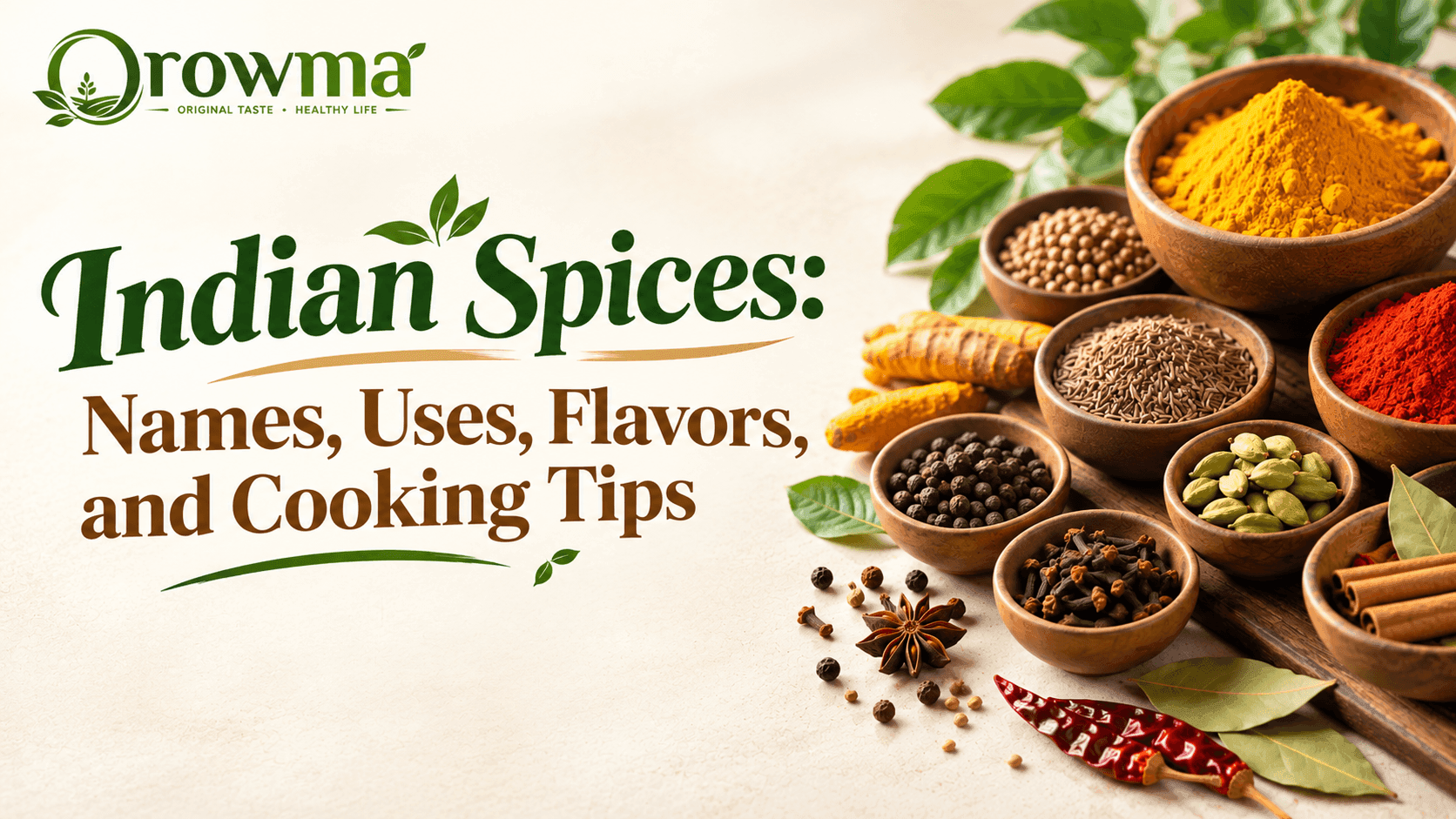
Indian spices are the heart of many traditional dishes, adding color, aroma, warmth, sweetness, and heat to food. From earthy cumin and golden turmeric to fragrant garam masala and bold red chilli, every spice has a different role in cooking. Understanding Indian spice names, flavors, uses, and cooking methods can help you prepare better curries, dals, rice dishes, vegetables, snacks, and marinades. Whether you are new to Indian cooking or simply want to improve everyday meals, learning how to use a few essential spices can make a noticeable difference.
Indian cuisine is known around the world for its rich flavors and fragrant aromas, and spices are a major reason why. However, Indian spices are not simply about making food hot. Each one contributes something different, from the earthy taste of cumin to the fresh, citrusy notes of coriander and the warm aroma of garam masala.
Knowing which Indian spice to use, when to add it, and how much to use can make cooking easier and more consistent. This guide explains the names, flavors, common uses, and cooking tips for some of the most popular Indian spices, making it useful for home cooks around the world.
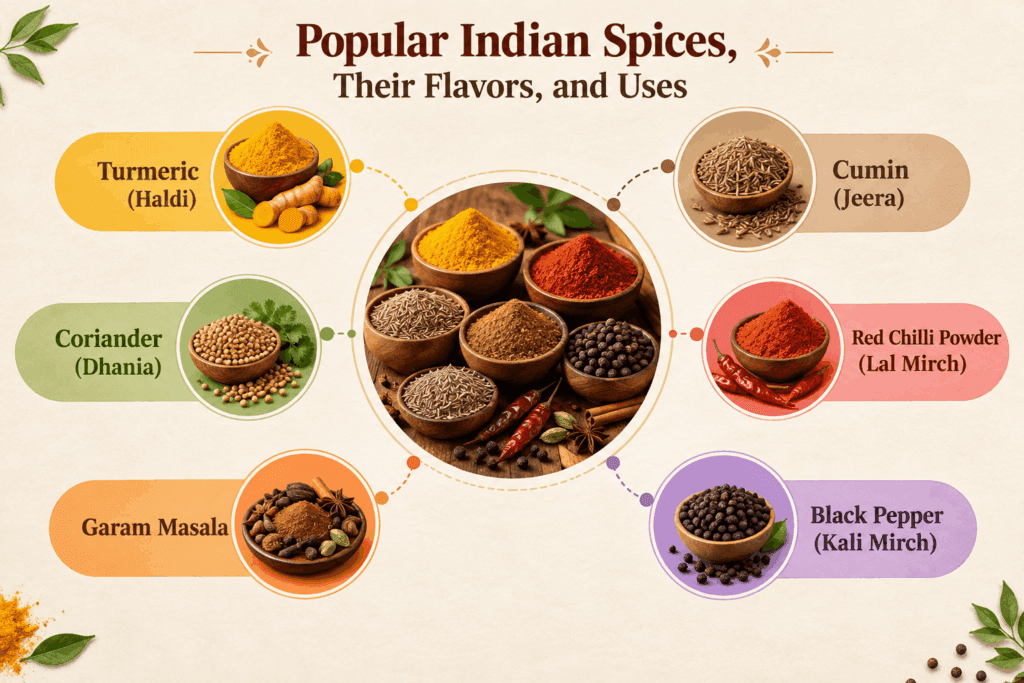
Turmeric is one of the most widely recognized Indian spices. It has an earthy, slightly bitter flavor and gives many dishes their familiar yellow-golden color.
Common uses: Turmeric is used in dals, vegetable curries, rice dishes, soups, marinades, and everyday Indian recipes.
Cooking tip: Use turmeric in small amounts and add it during the cooking process so its earthy flavor blends with the other ingredients. Turmeric powder is particularly convenient when a recipe calls for a consistent amount of ground spice. You can see an example of this form on the Orowma products page.
Cumin has a warm, earthy, slightly nutty flavor. It is commonly used either as whole seeds or in ground form.
Common uses: Cumin works well in dals, curries, rice dishes, roasted vegetables, raita, and spice blends.
Cooking tip: For stronger flavor, heat oil or ghee and add cumin seeds until they crackle and become fragrant. This process, known as tempering, releases their natural oils.
The difference between whole and ground spices can affect both cooking methods and flavor. This guide to whole and ground spices provides a useful comparison.
Coriander has a mild, fresh, slightly citrusy flavor. Ground coriander is particularly versatile and is commonly used in Indian gravies and spice blends.
Common uses: It can be added to vegetable curries, dals, marinades, soups, sauces, and homemade masalas.
Cooking tip: Add ground coriander with other powdered spices and avoid cooking it over extremely high heat, as burnt spice powders can develop a bitter taste.
Red chilli powder adds heat, color, and a distinctive spicy character. Different varieties can vary considerably in their level of heat.
Common uses: It is used in curries, dals, chutneys, marinades, stir-fried vegetables, snacks, and sauces.
Cooking tip: Start with a small amount and increase it gradually. If you want vibrant color without excessive heat, choose a milder chilli variety.
Garam masala is a blend of aromatic spices rather than one individual spice. Depending on the recipe and regional tradition, it may contain ingredients such as cumin, coriander, cardamom, cinnamon, cloves, and black pepper.
Common uses: Garam masala works well in curries, vegetables, lentils, rice dishes, soups, and marinades.
Cooking tip: It is often added toward the end of cooking to preserve its aroma. However, some recipes use it earlier to build a deeper flavor.
Black pepper has a sharp, warm, slightly woody flavor. It can provide heat without relying entirely on red chilli.
Common uses: Use it in soups, curries, marinades, rice dishes, salads, sauces, and spice blends.
Cooking tip: Freshly ground black pepper generally has a stronger aroma than pepper that has been ground and stored for a long time.
Both forms have an important place in Indian cooking. Whole spices such as cumin seeds, coriander seeds, and peppercorns are useful for tempering, roasting, and freshly grinding. Ground spices such as turmeric and coriander powder are convenient and distribute flavor evenly throughout a dish.
Whole spices can retain their aroma longer when stored correctly because less surface area is exposed to air. Ground spices, meanwhile, are quick and convenient for everyday cooking.
For a more detailed comparison of these two forms, see this guide to whole spices versus ground spices.

Tempering whole spices in hot oil or ghee is a simple way to release their aroma. Cumin seeds, mustard seeds, and other whole spices can be added at the beginning of many recipes.
Ground spices cook quickly. Very high heat can burn them and create a bitter taste. Keep the heat moderate and add liquid when necessary.
You do not need a large quantity of spices to make food flavorful. Start with a few basic spices and build flavor gradually. For example, cumin can create an aromatic base, coriander can add body, turmeric can provide color, and garam masala can add fragrance near the end.
Keep spices in tightly sealed containers in a cool, dry place away from direct sunlight, steam, and heat. The USDA recommends storing shelf-stable foods under appropriate conditions to help maintain their quality. USDA food storage guidance provides additional information.
Spices can also lose their aroma and flavor as they age. These tips for checking spice freshness explain some simple signs to look for when evaluating stored spices.
When buying spices, look for clean packaging, clear product information, and a noticeable natural aroma. Ground spices should generally be dry and free-flowing, while whole spices should look clean and free from visible contamination.
Freshness also matters. Spices can gradually lose aroma and flavor when exposed to air, heat, moisture, and light. This guide to buying fresh, pure spices covers several factors that can help when evaluating spices.
Spice purity is another consideration, particularly for frequently used ground spices. This guide to checking spice purity at home discusses simple ways to assess spices before using them.
Indian spices can transform simple ingredients into flavorful and aromatic meals, but using them well is more important than using a large number of spices. Start with everyday essentials such as turmeric, cumin, coriander, red chilli, garam masala, and black pepper. Learn the flavor of each spice, add it at the right stage, and adjust quantities gradually.
Good storage also matters. Keeping spices away from moisture, heat, and direct sunlight helps protect their aroma and flavor. With a few basic ingredients and simple cooking techniques, you can create flavorful Indian dishes while making the most of every spice in your kitchen.
Some of the most commonly used Indian spices include turmeric, cumin, coriander, red chilli, garam masala, black pepper, cardamom, cloves, cinnamon, and mustard seeds.
Turmeric is the main spice responsible for the bright yellow or golden color commonly found in Indian curries, dals, and rice dishes.
Cumin seeds are among the most popular spices for tempering. Depending on the recipe, cooks may also use mustard seeds, dried chillies, curry leaves, cloves, or other whole spices.
Garam masala is commonly added toward the end of cooking or shortly before serving. This helps preserve its aromatic character, although some recipes may use it earlier.
Neither is always better. Whole spices are useful for tempering, roasting, and freshly grinding, while ground spices are convenient and blend easily into curries, sauces, marinades, and other dishes.
Store spices in airtight containers in a cool, dry place away from direct sunlight, steam, and heat. Avoid keeping spice containers directly above or next to a cooker.
At Orowma, we bring authentic Indian flavors to your kitchen with carefully crafted spices and masalas. Made using traditional recipes and quality ingredients, our range includes spice powders, blended masalas, and whole
Get Started Now
Date: 30 October 2026
Date: 27 October 2026

Date: 25 October 2026
We use cookies to improve your browsing experience, analyze website traffic, and provide essential website functionality. You can accept all cookies, reject non-essential cookies, or manage your preferences.
Manage your cookie preferences. You can enable or disable different categories of cookies below.
Essential cookies enable basic functions and are necessary for the proper function of the website.
Marketing cookies are used to follow visitors to websites. The intention is to show ads that are relevant and engaging to the individual user.
Website security powered by MilesWeb
Login to continue to Orowma
Join Orowma today
Enter the 6-digit code sent to your email.