
What Is Chaat Masala? Ingredients, Flavor, and Common
Date: 30 October 2026
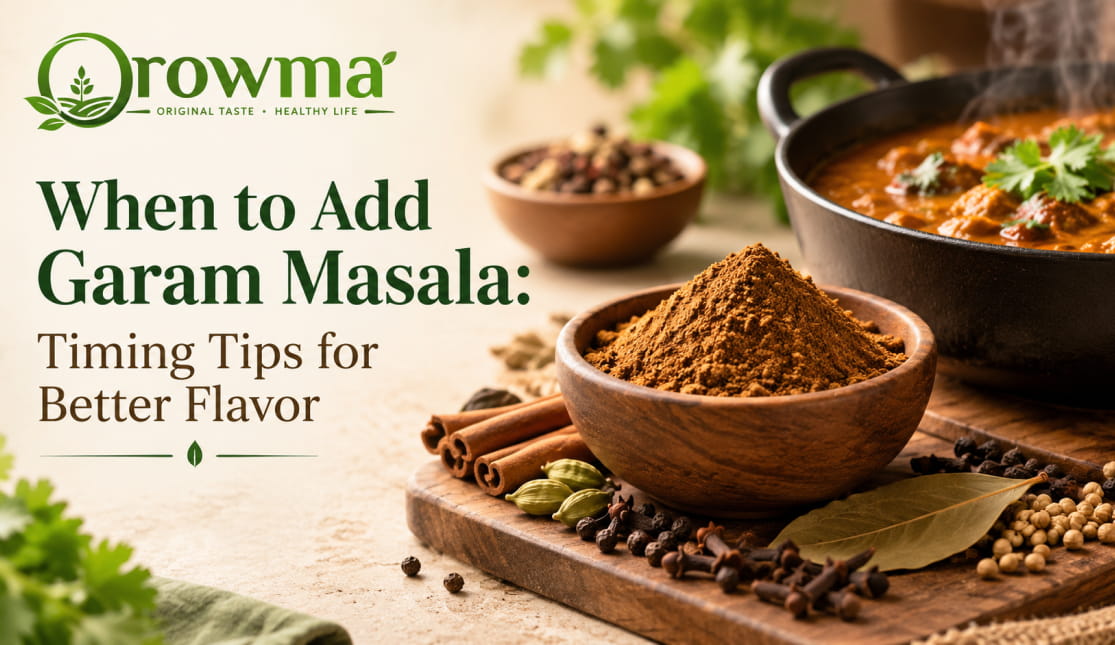
Knowing when to add garam masala can influence the aroma and flavor of Indian dishes. Adding it near the end works well for many recipes, while earlier addition can suit slow-cooked dishes. This guide explains garam masala timing for curries, dal, sabzi, biryani, and tadka, including how to avoid burning the spice.
Have you ever wondered whether garam masala should go into a dish at the beginning or just before serving? The answer depends on the recipe, cooking time, and heat level.
Adding garam masala too early may reduce some of its delicate aromatic notes during prolonged cooking. Adding it too late, however, may leave its flavor more pronounced than you intended. Finding the right moment helps the spice blend into the dish while preserving the aroma you want.
Writing
From everyday dal to slow-cooked curries and biryani, understanding when to add garam masala can help you make better cooking decisions. As one of the commonly used Indian spices, garam masala can bring a distinctive aroma to a dish when added at the right stage of cooking.
For many Indian recipes, adding garam masala during the final few minutes of cooking is a practical starting point. Once the main ingredients are cooked and the dish reaches its desired consistency, stir in the spice and let it cook gently for a short time.
This approach helps preserve more of the blend’s delicate aroma, which can become less noticeable during prolonged cooking.
You can also add garam masala after switching off the heat. The residual warmth can help release its fragrance without exposing it to continued high temperatures. Stir it evenly into the dish before serving.
However, the final stage is not always the only suitable time. Recipes that require a longer simmer may benefit from adding a portion earlier so its flavor develops alongside the other ingredients.
The difference between early and late addition comes down to how long the spice cooks.
Early addition: Adding garam masala while a dish is still simmering gives its flavor more time to blend with the gravy or other ingredients. This can work well in recipes that need extended cooking. The trade-off is that some of its aromatic qualities may become less noticeable.
Late addition: Adding it toward the end helps keep its fragrance more prominent. This is useful when the main ingredients are already cooked and the dish needs a final layer of flavor.
A two-stage approach: For certain slow-cooked recipes, add a portion during cooking and reserve a little for the finishing stage. This can balance an integrated flavor with a noticeable aroma. Adjust the method according to the recipe rather than automatically adding extra spice.
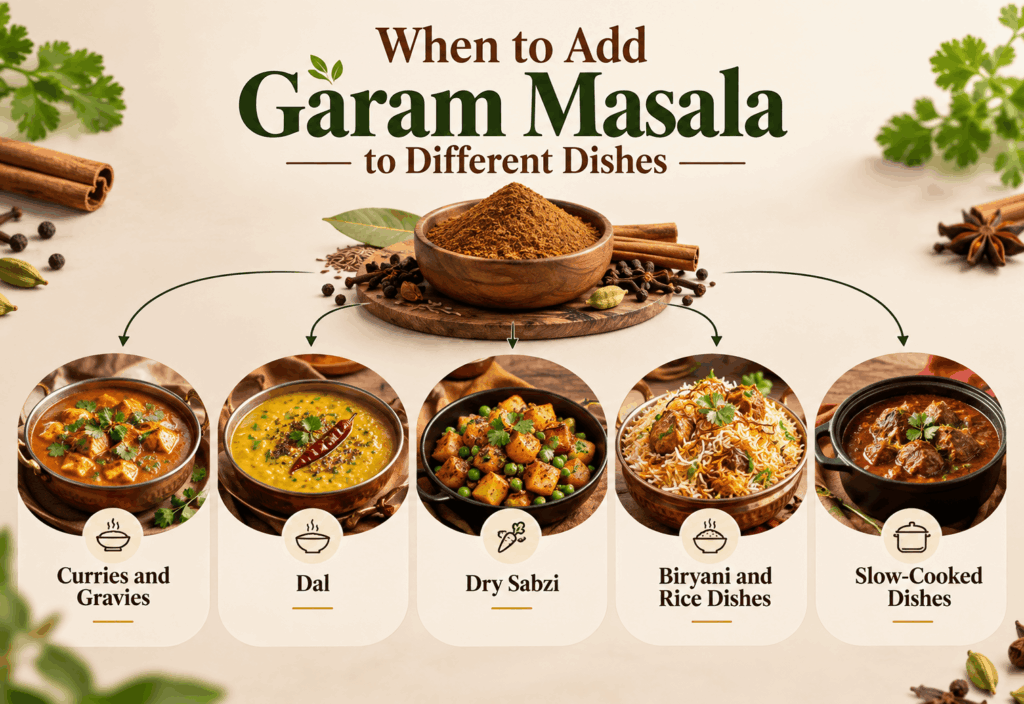
The right timing varies according to how each dish cooks.
For paneer curry, vegetable gravy, and chole, add garam masala when the main ingredients are cooked and the gravy is nearly ready. Stir it in and allow the dish to simmer gently for a short time.
If the recipe needs a longer simmer, add a portion earlier and finish with a small amount near the end if required. This allows the flavor to develop without relying entirely on prolonged cooking.
For everyday dal, add garam masala toward the end of cooking or incorporate it into the final tadka.
When preparing tadka, reduce the heat before adding the powder. Stir briefly, then proceed with the other ingredients or liquid according to your recipe. Avoid leaving the spice in excessively hot oil, as it can scorch quickly.
For dry sabzi, add garam masala when the vegetables are almost cooked. Sprinkle it evenly, toss gently, and cook over low heat for a short time if necessary.
If the vegetables are already done, switch off the heat before mixing in the spice. This is especially helpful when the pan contains little moisture and the powder could burn easily.
Biryani timing depends on the recipe and cooking method. Garam masala may be incorporated into the prepared masala or added between the rice and masala layers before dum cooking.
Follow the recipe’s layering instructions rather than adding a large amount at the end. If a finishing addition is recommended, use it sparingly so the flavor remains balanced.
For dishes that simmer for a long time, adding all the garam masala at the end is not always necessary. A portion can be added earlier to allow the flavor to blend with the other ingredients.
If you want a more noticeable aroma when serving, reserve a small portion for the final stage. This approach is particularly useful when the recipe involves extended simmering.
Yes, but heat control is essential. Ground garam masala can scorch quickly in very hot oil or ghee, creating a bitter taste that may affect the entire dish.
Reduce the heat before adding the powder. Stir it briefly and continue with the recipe without leaving it unattended. If the oil is smoking hot, let it cool slightly first.
Alternatively, add garam masala after switching off the heat while the pan is still warm. Residual heat may be enough to release its fragrance without prolonged exposure to high temperatures.
Remember that ground garam masala does not need to be treated exactly like whole spices commonly added at the beginning of a tempering process. Because the powder can burn quickly, pay close attention to the temperature and cooking time.
Avoid these timing mistakes for more consistent results:
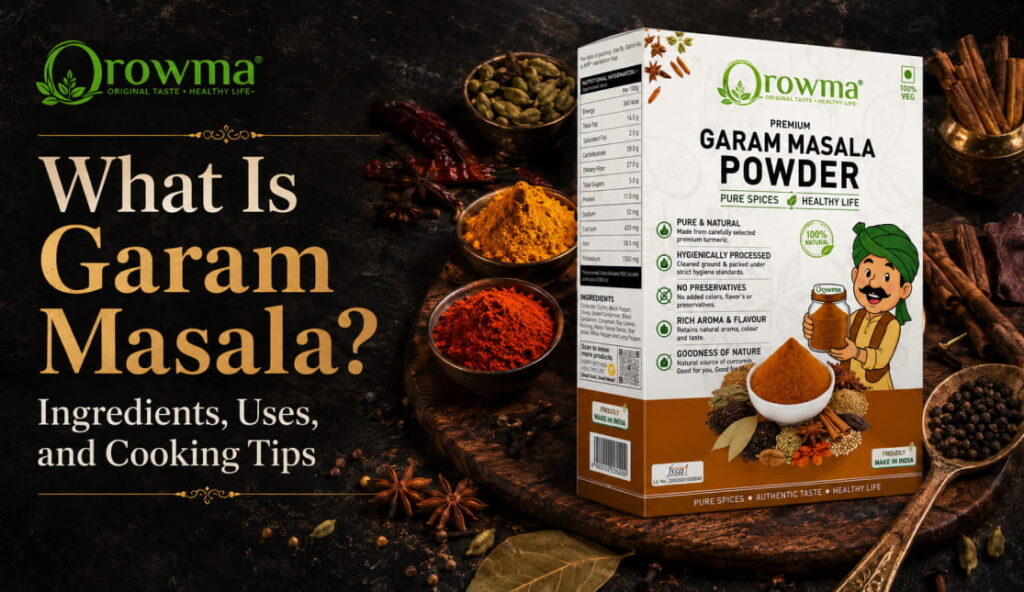
For a broader explanation of the blend and its ingredients, read our guide to what garam masala is and its ingredients and uses. To explore the product, visit Orowma Garam Masala.
The best time to add garam masala depends on the recipe and the flavor you want. For many curries, dal, and dry sabzi dishes, adding it near the end is a useful starting point. Slow-cooked recipes may benefit from earlier addition, while tadka requires careful heat control. Adjust the timing to the dish, taste before making further changes, and avoid prolonged high heat after adding the powder.
For many everyday dishes, add it during the final few minutes. Slow-cooked recipes may benefit from adding a portion earlier.
Yes. Residual heat can help release its aroma. Stir it evenly into the dish before serving.
Yes, but reduce the heat first. Smoking-hot oil can burn the powder and create bitterness.
Around one to three minutes of gentle cooking is often sufficient when adding it near the end. The exact time depends on the recipe.
Yes. Compare product details and suitability for your recipes before choosing a blend. Visit Orowma Garam Masala to view the available product information.
At Orowma, we bring authentic Indian flavors to your kitchen with carefully crafted spices and masalas. Made using traditional recipes and quality ingredients, our range includes spice powders, blended masalas, and whole
Get Started Now
Date: 30 October 2026
Date: 27 October 2026
Date: 22 October 2026
We use cookies to improve your browsing experience, analyze website traffic, and provide essential website functionality. You can accept all cookies, reject non-essential cookies, or manage your preferences.
Manage your cookie preferences. You can enable or disable different categories of cookies below.
Essential cookies enable basic functions and are necessary for the proper function of the website.
Marketing cookies are used to follow visitors to websites. The intention is to show ads that are relevant and engaging to the individual user.
Website security powered by MilesWeb
Login to continue to Orowma
Join Orowma today
Enter the 6-digit code sent to your email.