
What Is Chaat Masala? Ingredients, Flavor, and Common
Date: 30 October 2026
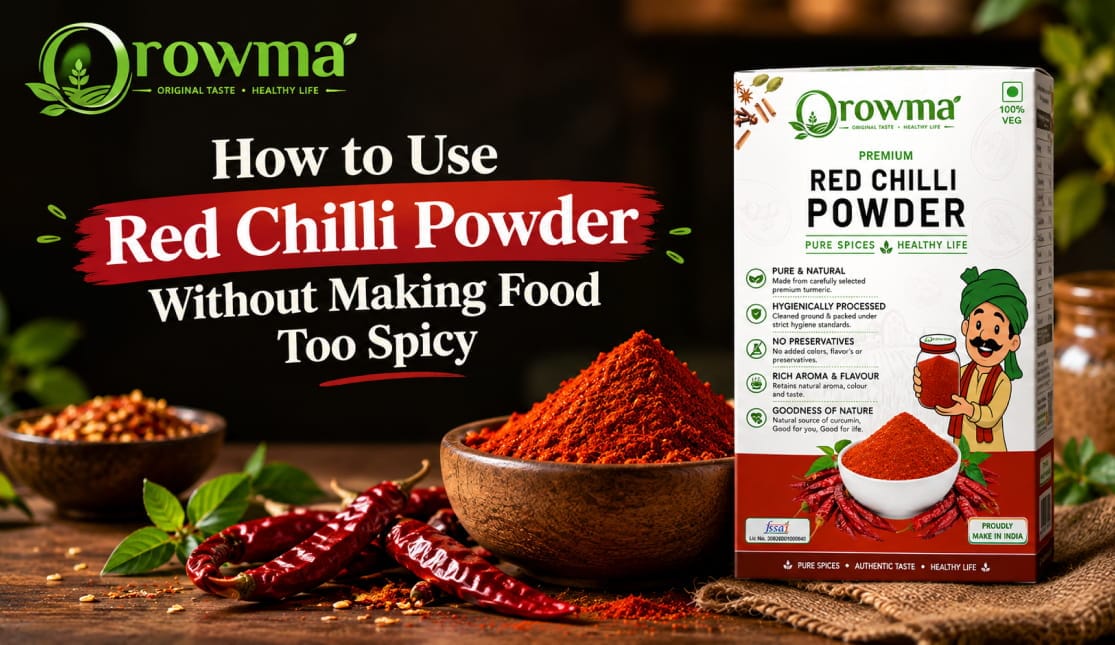
Red chilli powder adds colour, flavour, and heat to food, but too much can easily overpower a dish. The best way to control heat is to start with a small quantity, choose the right chilli variety, and adjust gradually while cooking. Kashmiri chilli powder can be useful when you want vibrant colour with comparatively less heat, while ingredients such as yogurt, coconut, tomato, or additional gravy can help balance an overly spicy dish.
Red chilli powder, also known as lal mirch powder, is a staple ingredient in Indian cooking. It adds colour, warmth, and chilli flavour to dal, sabzi, curry, rice, marinades, and snacks. However, getting the right amount can sometimes be difficult.
The heat level is not the same for every product. It depends on the chilli variety, processing method, and the particular powder being used. Therefore, there is no universal quantity that will produce the same level of heat in every recipe.
Learning how to use red chilli powder is mainly about controlling the quantity, choosing the right variety, and adjusting it according to taste. With a few simple techniques, you can enjoy the flavour and colour of chilli without making your food unnecessarily spicy.
The heat of red chilli powder depends mainly on the chilli variety used. Some varieties are relatively mild, while others can be significantly hotter.
The amount used also makes a major difference. Adding several teaspoons at once can quickly make a dish hotter than expected, particularly when you are unfamiliar with the product.
It is also important not to judge chilli heat by colour alone. A bright red powder does not necessarily mean that it is extremely hot. Different chilli varieties can provide different combinations of colour, aroma, flavour, and heat.
For more predictable results, check the product information and become familiar with the particular Indian red chilli powder you regularly use.
The simplest way to control chilli heat is to start with a small quantity.
Rather than adding the entire amount at the beginning, add a modest quantity, mix it well, and let the dish cook. Taste it before deciding whether more is needed.
This method is particularly useful for dal, sabzi, and curry because once chilli powder has been mixed throughout the dish, reducing its intensity becomes much more difficult.
If you are looking for a chilli powder for everyday recipes, you can explore Orowma’s Premium Red Chilli Powder and check the available product information before deciding how much to use.
If you prefer chilli flavour without intense heat, choose a mild chilli powder where appropriate.
Another option is Kashmiri chilli powder, which is commonly used when cooks want a rich red colour with comparatively moderate heat. However, the actual heat level can vary between products, so check the product description rather than assuming every Kashmiri chilli powder has the same intensity.
Choosing the right type of chilli is one of the easiest ways to control the final flavour of a dish.
Knowing how to use chilli powder in cooking also involves understanding when to add it.
In many Indian recipes, chilli powder is added along with other powdered spices while preparing the masala or gravy. Cooking it briefly with the other ingredients allows the spice to blend into the dish.
However, avoid exposing powdered spices to excessively high heat for too long. Burnt chilli powder can develop a bitter or unpleasant flavour.
When preparing tadka or cooking spices in oil, use controlled heat and follow the recipe’s recommended cooking sequence.
Chilli powder is easier to control when added in stages.
Add a little, mix thoroughly, allow the dish to cook, and taste before adding more. This gives you much better control than adding a large quantity at once.
This technique is especially useful when cooking for family or guests because everyone’s preferred level of spiciness can be different.
If you have already added too much chilli, there are several ways to reduce spiciness in food, depending on the recipe.
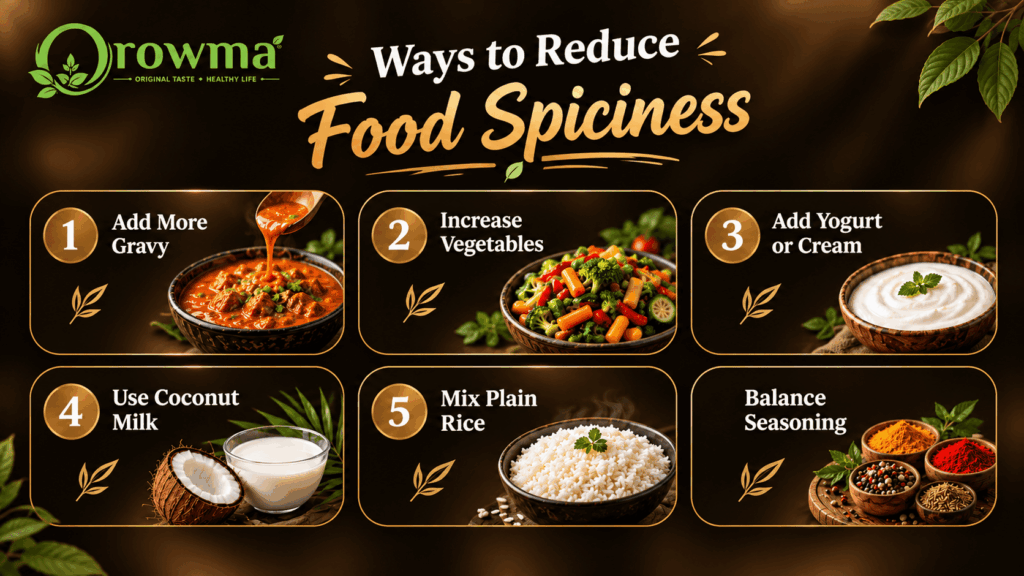
The most practical approach is often to increase the amount of compatible ingredients. This spreads the chilli through a larger quantity of food and can bring the overall flavour closer to the desired level.
In suitable recipes, ingredients such as yogurt or cream can help soften the perception of chilli heat. Coconut milk or other coconut-based ingredients can also work well in compatible curries.
These ingredients can change the flavour and texture of a dish, so use them only when they suit the recipe.
If you are wondering how to reduce spice in curry, increasing the curry base can be useful.
For example, if a vegetable curry is too hot, adding more vegetables and compatible gravy can distribute the chilli. In dal, increasing the amount of dal or suitable liquid can help bring the overall seasoning closer to balance.
For some tomato-based dishes, adding more cooked tomato or gravy may also help. The best approach depends on the ingredients already present in the recipe.
Dal: Start with a small amount of chilli powder. If the dal becomes too spicy, increasing the dal or compatible liquid can help balance the overall seasoning.
Sabzi: Add chilli gradually and use other spices for flavour. If the sabzi becomes too hot, increasing the vegetables or suitable gravy can help.
Curry: Build the heat gradually and increase the compatible curry base if necessary. Tomato, onion-based gravy, coconut, yogurt, or cream may work depending on the recipe.
Rice: For some rice dishes, mixing an overly spicy portion with additional plain cooked rice can reduce the overall intensity.
Marinades: Start conservatively because chilli flavour can become more noticeable as the marinade sits on the ingredients.
Snacks: Instead of applying a large amount of chilli powder at once, combine it with other seasonings and adjust according to taste.
When using multiple spices, choose good-quality Indian spices that complement rather than overpower the main ingredients.
One common mistake is assuming that all red chilli powders have the same heat level. Another is judging quantity by colour instead of measuring it.
Adding too much at the beginning is also difficult to correct. It is much easier to increase chilli gradually than to remove it after it has been incorporated into the dish.
Using old or poorly stored ground spices can also affect flavour consistency. Chilli powder should be kept in a tightly sealed container in a cool, dry place away from direct sunlight and moisture.
For additional tips on maintaining spice quality, see Orowma’s guide to storing spices at home.
Avoid using a wet spoon in the container, as moisture can cause the powder to clump and affect its quality.
Using red chilli powder successfully is mainly about control. Start with a small quantity, understand the heat level of your chosen product, and adjust gradually rather than adding a large amount at once. If you want colour with comparatively less heat, Kashmiri chilli powder may be suitable, although individual products can vary. If a dish becomes too spicy, increasing compatible ingredients such as vegetables, gravy, dal, tomato, dairy, or coconut can help balance the overall flavour. With the right approach, fresh spices, ground spices, and authentic Indian spices can add flavour and colour without overpowering the rest of the dish.
There is no universal amount because chilli heat varies by variety and product. Start with a small quantity, taste the dish, and gradually add more if needed.
Start with a small amount and increase it gradually. Choosing a mild chilli powder can also help when you want chilli flavour without excessive heat.
Increase suitable non-spicy ingredients such as vegetables, dal, rice, gravy, tomato, dairy, or coconut, depending on the recipe. This can distribute the chilli throughout a larger quantity of food.
Increase the compatible curry base, such as tomato, onion-based gravy, coconut, yogurt, or cream, depending on the recipe. Adding more vegetables can also help in suitable curries.
Kashmiri chilli powder is commonly selected for its strong red colour and comparatively moderate heat, but the actual heat level varies by product. Always check the product information.
Lal mirch powder is the common Hindi term for red chilli powder. It is made by grinding dried red chillies and is widely used to add colour, flavour, and heat to food.
Store it in a tightly sealed container in a cool, dry place away from direct sunlight and moisture. Use a clean, dry spoon to help maintain its quality and prevent moisture-related clumping.
At Orowma, we bring authentic Indian flavors to your kitchen with carefully crafted spices and masalas. Made using traditional recipes and quality ingredients, our range includes spice powders, blended masalas, and whole
Get Started Now
Date: 30 October 2026
Date: 27 October 2026
Date: 25 October 2026
We use cookies to improve your browsing experience, analyze website traffic, and provide essential website functionality. You can accept all cookies, reject non-essential cookies, or manage your preferences.
Manage your cookie preferences. You can enable or disable different categories of cookies below.
Essential cookies enable basic functions and are necessary for the proper function of the website.
Marketing cookies are used to follow visitors to websites. The intention is to show ads that are relevant and engaging to the individual user.
Website security powered by MilesWeb
Login to continue to Orowma
Join Orowma today
Enter the 6-digit code sent to your email.