
What Is Chaat Masala? Ingredients, Flavor, and Common
Date: 30 October 2026
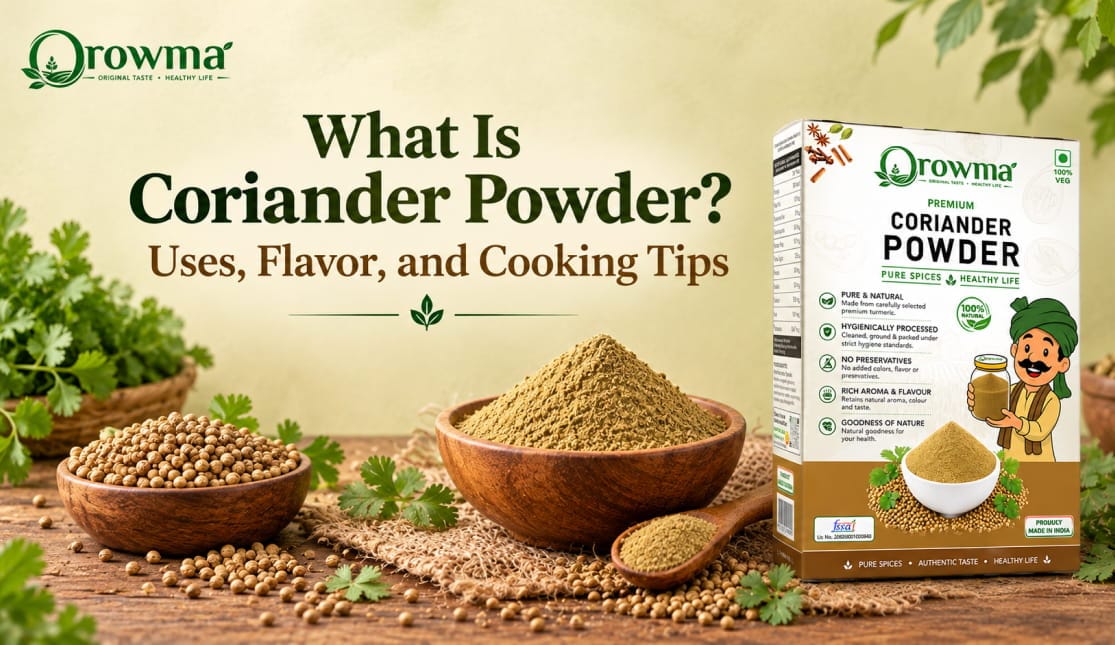
Coriander powder is a ground spice made from dried coriander seeds, commonly known as dhania powder in India. It has a mild, warm, earthy flavor with slightly citrusy and nutty notes and is widely used in Indian cooking. It adds depth to curries, dals, vegetables, marinades, gravies, spice blends, and snacks without usually overpowering other ingredients. For the best flavor, use freshly made coriander powder, add it at the appropriate stage of cooking, and store it in an airtight container away from heat, moisture, and direct sunlight.
Coriander powder is one of those everyday spices that quietly does a lot of work in the kitchen. Known as dhania powder in India, it brings a warm, earthy character and subtle citrus-like freshness to a wide range of dishes. It is especially common in Indian curries, dals, sabzis, gravies, marinades, and homemade spice blends. But how much should you actually use? When should it go into the pan? And how is coriander powder different from cumin powder? This guide answers those questions in simple terms. Whether you are cooking a basic dal or preparing a rich curry, understanding how coriander powder behaves can help you use it more confidently and get better balance and aroma from your spices.
Coriander powder is a spice made by grinding dried coriander seeds into a fine or moderately fine powder. Coriander comes from the Coriandrum sativum plant, and its dried seeds are commonly used as a spice, while its fresh leaves are widely used as an herb. USDA National Agricultural Library: Coriander Seed.
In Indian cooking, coriander powder is commonly known as dhania powder. It is a basic ingredient in many masala preparations and everyday dishes.
Unlike some stronger spices, coriander powder usually has a relatively gentle flavor. Its main role is often to provide body, warmth, aroma, and balance to a dish while allowing other spices to remain noticeable.
For everyday Indian cooking, coriander powder can be used in everything from a simple vegetable sabzi to a tomato-based curry or homemade masala.
Coriander powder is made from dried coriander seeds. The basic process is straightforward:
The exact method can vary between kitchens and spice producers.
If you are grinding coriander at home, avoid overheating the seeds during grinding. Excessive heat can reduce the freshness of the aroma.
Both forms are useful, but they behave differently in cooking.
Feature | Coriander Seeds | Coriander Powder |
Form | Whole dried seeds | Ground spice |
Flavor release | Gradual | Faster |
Best for | Tempering, roasting, grinding | Curries, gravies, marinades, spice blends |
Storage | Generally keeps its character longer when properly stored | Loses aroma faster once ground |
Convenience | Requires preparation | Ready to use |
If you frequently cook Indian dishes, keeping both whole coriander seeds and coriander powder can be useful.
Coriander powder has a mild, earthy, warm, slightly nutty flavor with subtle citrus-like notes.
Its flavor is usually less sharp than cumin and less hot than chilli powder. This makes it particularly useful when you want to build flavor without making a dish overwhelmingly spicy.
The exact flavor can vary depending on the coriander seeds, freshness, grinding method, and whether the seeds were roasted before grinding
Coriander powder can smell different at different stages of cooking.
When added to hot oil or a cooked masala, its aroma becomes more noticeable. When cooked with onions, tomatoes, vegetables, lentils, or other ingredients, it blends into the dish and contributes to the overall flavor rather than standing out on its own.
This is one reason coriander powder works well as a base spice.
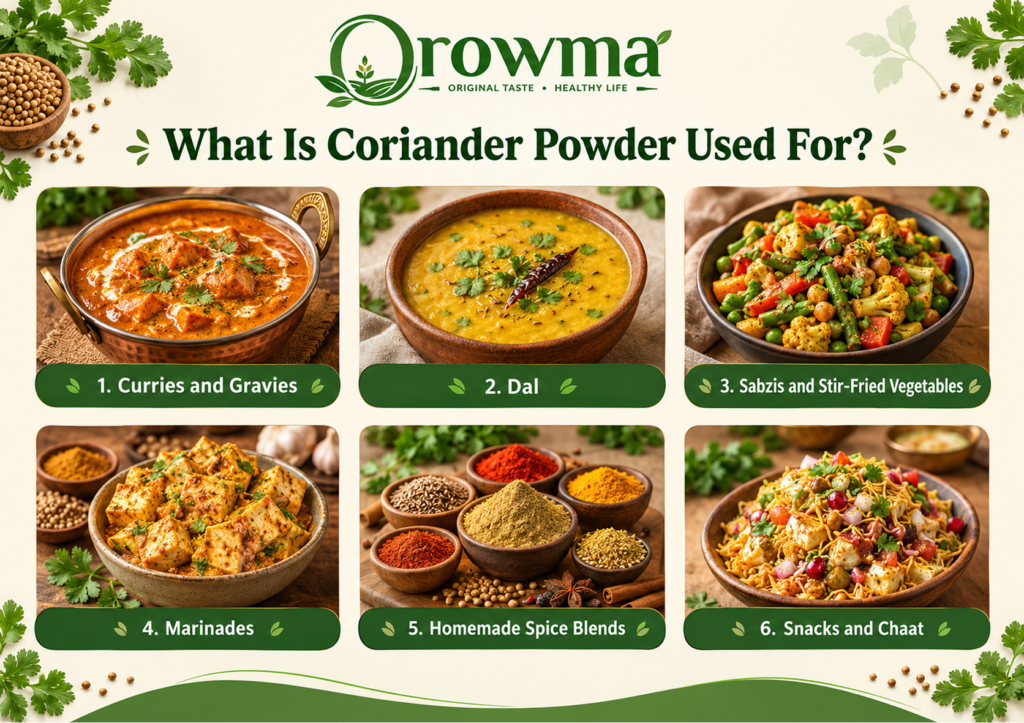
Coriander powder is a versatile spice used in many types of cooking.
Coriander powder is commonly used in vegetable, paneer, chicken, and other curry preparations. It helps build the foundation of the masala and gives the gravy a rounded spice character.
For example, it can be used in:
For everyday cooking, you can explore Orowma’s range of pure Indian spices.
A small amount of coriander powder can add warmth and depth to dal.
It works particularly well alongside cumin, turmeric, chilli, ginger, garlic, and other commonly used dal seasonings.
Coriander powder is useful in dry vegetable preparations such as potato, cauliflower, peas, beans, and mixed vegetables.
Add it with other ground spices so that it coats the vegetables evenly.
Coriander powder can be included in marinades for vegetables, paneer, chicken, and other foods.
It combines particularly well with ingredients such as:
Coriander is an important ingredient in many Indian spice combinations. It is frequently paired with cumin, chilli, turmeric, black pepper, and other spices.
For dishes that call for a broader spice profile, Orowma Garam Masala and other Indian spice options can complement everyday cooking.
Coriander powder can also be used in savory snacks and spice mixes, although the amount depends heavily on the recipe.
It can contribute an earthy background note alongside tangy, salty, spicy, and aromatic ingredients.
The best way to use coriander powder depends on the recipe.
For many Indian dishes, it is added after the initial aromatics have cooked and before the liquid ingredients are incorporated. This gives the spice an opportunity to cook with the masala.
A simple approach is:
Oil or ghee → whole spices/aromatics → onion → ginger-garlic → tomato → ground spices → main ingredients → liquid, if required
However, this is not a fixed rule. Some recipes add ground spices at different stages.
Ground coriander should be cooked enough to release its aroma and blend into the dish, but it should not be left on high heat until it burns.
If your pan is very dry, add a little water or another recipe-appropriate liquid when necessary. Burnt ground spices can introduce an unpleasant bitter taste.
There is no single correct quantity because it depends on the recipe, serving size, other spices, and personal preference.
As a practical starting point:
Dish | Starting Amount |
Small vegetable dish | ½–1 teaspoon |
Medium curry | 1–2 teaspoons |
Dal | ½–1 teaspoon |
Marinade | 1–2 teaspoons, depending on quantity |
Homemade spice blend | According to the recipe |
These are starting points rather than strict measurements.
If you are unfamiliar with coriander powder, start with less and adjust after tasting. It is easier to add more than to correct an overly spiced dish.
Coriander powder is particularly flexible because its flavor works well with both mild and stronger spices.
Coriander and cumin are a classic combination. Cumin brings a deeper, warmer and more pronounced character, while coriander provides a softer earthy and citrus-like note.
Turmeric adds its characteristic earthy flavor and color, while coriander helps create a more rounded spice profile.
You can use both in everyday curries, dals, and vegetable dishes.
Red chilli powder provides heat and color. Coriander powder helps balance the overall spice profile with its milder earthy flavor.
Black pepper adds a sharper, more pungent note. Coriander powder can soften and complement that intensity.
Coriander powder can work as part of the main masala base, while garam masala is often added later in cooking or toward the end, depending on the recipe.
The two should not be treated as interchangeable because they serve different purposes.
Coriander powder and cumin powder are both common Indian spices, but their flavors are noticeably different.
Difference | Coriander Powder | Cumin Powder |
Hindi name | Dhania powder | Jeera powder |
Main flavor | Earthy, mild, slightly citrusy | Warm, earthy, nutty, more pungent |
Intensity | Generally milder | Generally stronger |
Common use | Curries, gravies, sabzis, marinades | Dal, raita, chaats, curries, spice blends |
Can they be substituted? | Sometimes, depending on recipe | Sometimes, depending on recipe |
If a recipe specifically calls for coriander powder, replacing it entirely with cumin powder can noticeably change the flavor.
If you run out of coriander powder, the best substitute depends on the recipe.
Ground coriander seeds: This is the most direct option if you have whole coriander seeds and a spice grinder.
A small amount of cumin powder: This may work in some savory recipes, but it will produce a different flavor.
Cumin-coriander blend: If available, this can be useful in dishes where both flavors are appropriate.
There is no universal one-to-one substitute because coriander powder has its own distinct flavor profile.
Fresh coriander powder should have a recognizable warm, aromatic smell. If the powder smells weak or stale, it may have lost much of its character.
Coriander powder is mild, but using a large amount does not necessarily make a dish better. Start with a sensible quantity and adjust.
High heat can quickly damage ground spices. Keep the heat controlled when cooking powdered spices in oil.
If you have whole coriander seeds, grinding a small batch when needed can provide a noticeably fresh aroma.
Coriander powder works best as part of a balanced spice profile. Pair it with complementary ingredients instead of relying on it alone.
Not every dish requires coriander powder at the same cooking stage. Follow the recipe and consider whether the spice needs to cook with the masala or be added later.
Proper storage helps protect coriander powder from moisture, heat, light, and unwanted odors.
Follow these simple steps:
Ground spices generally lose their aroma gradually after grinding, so buying or preparing quantities that you can use while they remain aromatic is practical.
More spice does not always mean more flavor. Excess coriander powder can make a dish heavy or muddy rather than balanced.
Adding ground spices to an extremely hot, dry pan can cause them to burn quickly.
Even a good spice can lose its aroma when exposed to air, moisture, heat, and light over time.
Coriander powder is made from dried coriander seeds, while fresh coriander leaves are an herb commonly used as a garnish or fresh ingredient. They have different flavors and cannot always replace one another.
Although both are commonly used together, coriander powder and cumin powder have different flavor profiles. Substituting one for the other can change the character of the dish.
When buying coriander powder, look for a product with clear ingredient information and appropriate packaging.
Consider:
For regular home cooking, smaller quantities can be practical if you do not use coriander powder frequently, as this can help you finish the product while its aroma is still noticeable.
Coriander powder is a versatile everyday spice that adds earthy warmth, mild citrus-like notes, and depth to many dishes. Known as dhania powder in India, it works particularly well in curries, dals, sabzis, gravies, marinades, and spice blends. For better results, use a sensible quantity, cook it without burning, and store it in an airtight container away from heat and moisture. Pairing coriander powder with complementary spices such as cumin, turmeric, chilli, black pepper, and garam masala can create a balanced flavor profile. Whether you use a ready-made powder or grind whole coriander seeds at home, freshness and proper storage make a noticeable difference.

Coriander powder is a ground spice made from dried coriander seeds. It is commonly called dhania powder in India and is widely used in curries, dals, vegetables, gravies, marinades, and spice blends.
Coriander powder generally has a mild, earthy, warm flavor with slightly citrusy and nutty notes. It is usually less pungent than cumin powder and does not provide chilli-like heat.
It is commonly used in Indian curries, dal, sabzis, gravies, marinades, snacks, and homemade spice blends. It can also be combined with other ground spices to build a balanced masala.
The amount depends on the recipe and serving size. As a starting point, about ½–2 teaspoons is common for many home-cooked dishes, but the recipe and desired flavor should determine the final quantity.
Not as a direct replacement in every recipe. Coriander and cumin have different flavor profiles. Coriander is generally milder and more citrusy, while cumin has a stronger, warmer and more pungent flavor.
Coriander powder pairs well with cumin, turmeric, red chilli powder, black pepper, and garam masala. The combination depends on the dish and desired flavor.
Yes. You can clean and dry whole coriander seeds and grind them into powder using a suitable spice grinder. Grinding smaller batches can help retain a fresh aroma.
Store coriander powder in a clean, airtight container in a cool, dry, dark place. Keep it away from moisture, direct sunlight, and steam from the cooking area.
Coriander powder is made from dried coriander seeds, while fresh coriander leaves are an herb. They have different flavors and are generally used at different stages of cooking.
Yes. Coriander powder works well in marinades for foods such as vegetables, paneer, and meat, especially when combined with ingredients such as yogurt, lemon, ginger, garlic, and other spices.
It is often cooked with the masala in Indian recipes to develop its aroma and blend its flavor into the dish. However, the ideal cooking stage depends on the specific recipe.
At Orowma, we bring authentic Indian flavors to your kitchen with carefully crafted spices and masalas. Made using traditional recipes and quality ingredients, our range includes spice powders, blended masalas, and whole
Get Started Now
Date: 30 October 2026

Date: 27 October 2026

Date: 25 October 2026
We use cookies to improve your browsing experience, analyze website traffic, and provide essential website functionality. You can accept all cookies, reject non-essential cookies, or manage your preferences.
Manage your cookie preferences. You can enable or disable different categories of cookies below.
Essential cookies enable basic functions and are necessary for the proper function of the website.
Marketing cookies are used to follow visitors to websites. The intention is to show ads that are relevant and engaging to the individual user.
Website security powered by MilesWeb
Login to continue to Orowma
Join Orowma today
Enter the 6-digit code sent to your email.