
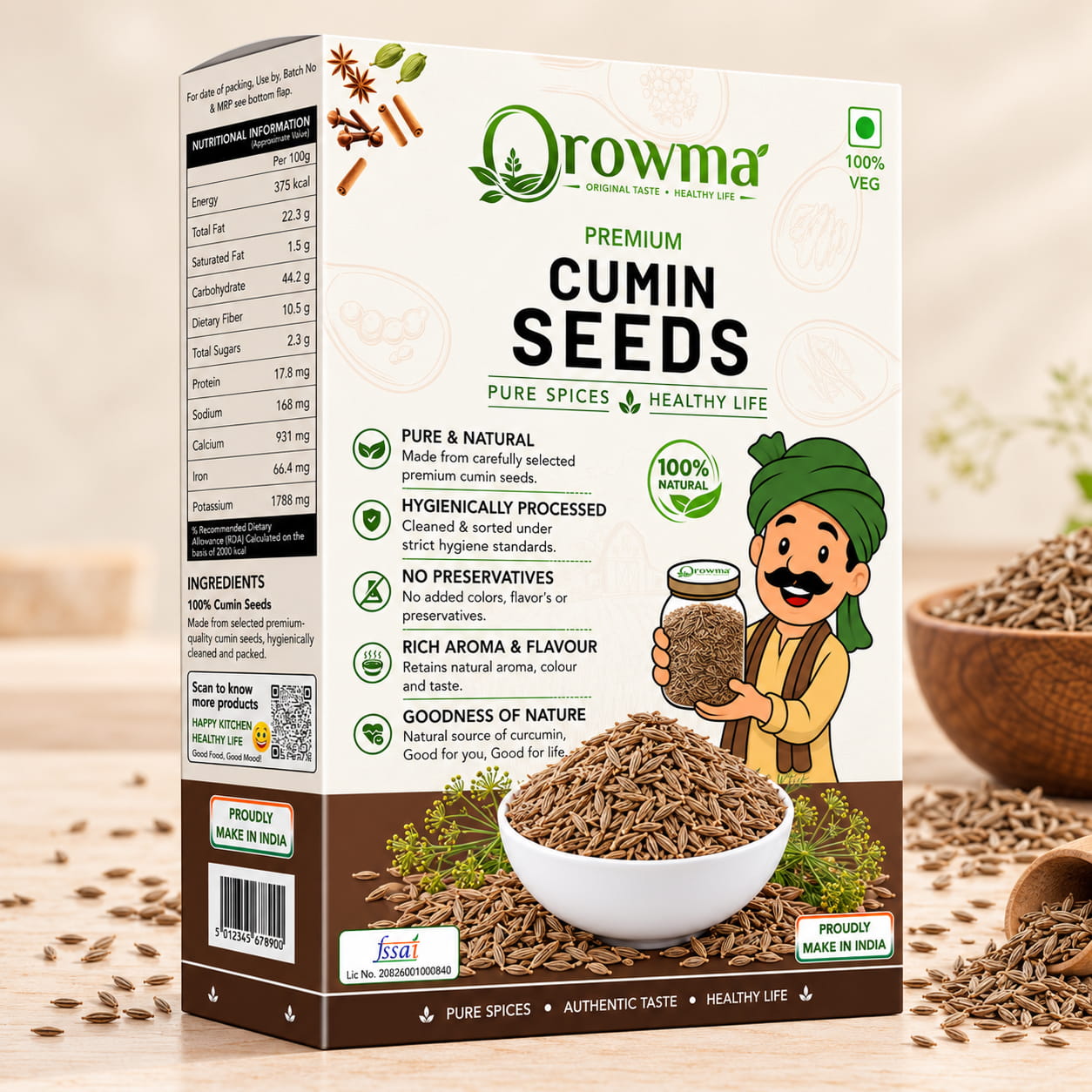
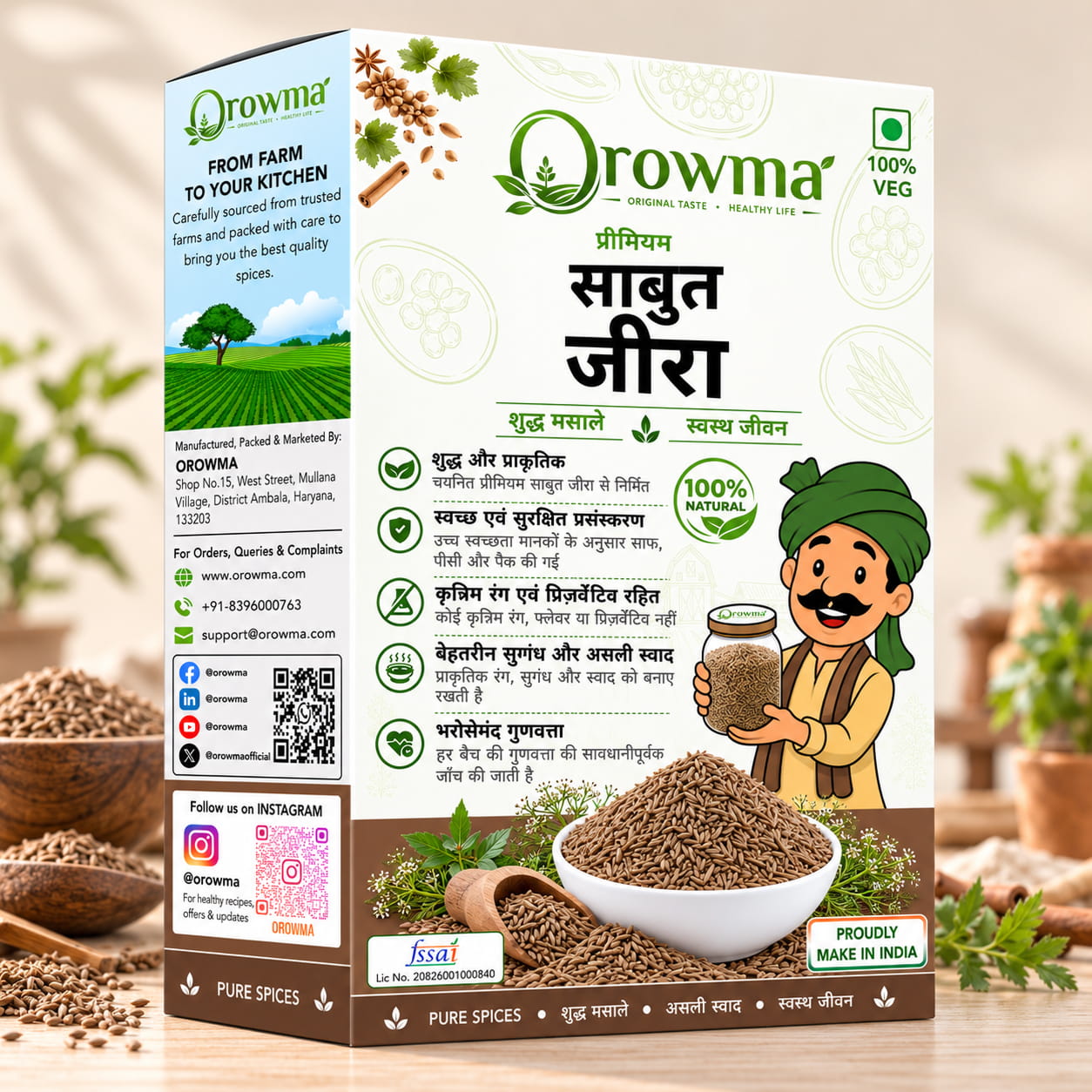
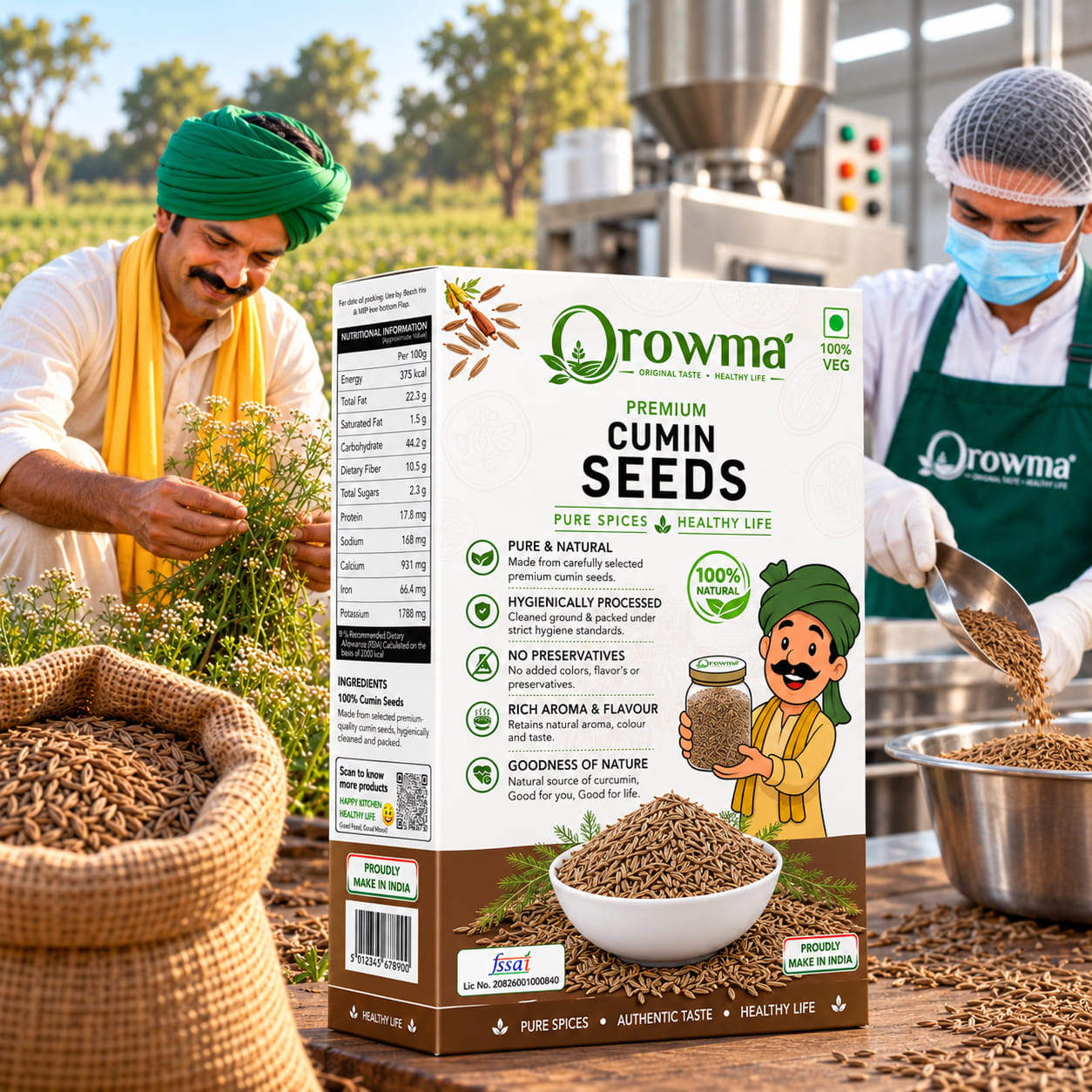
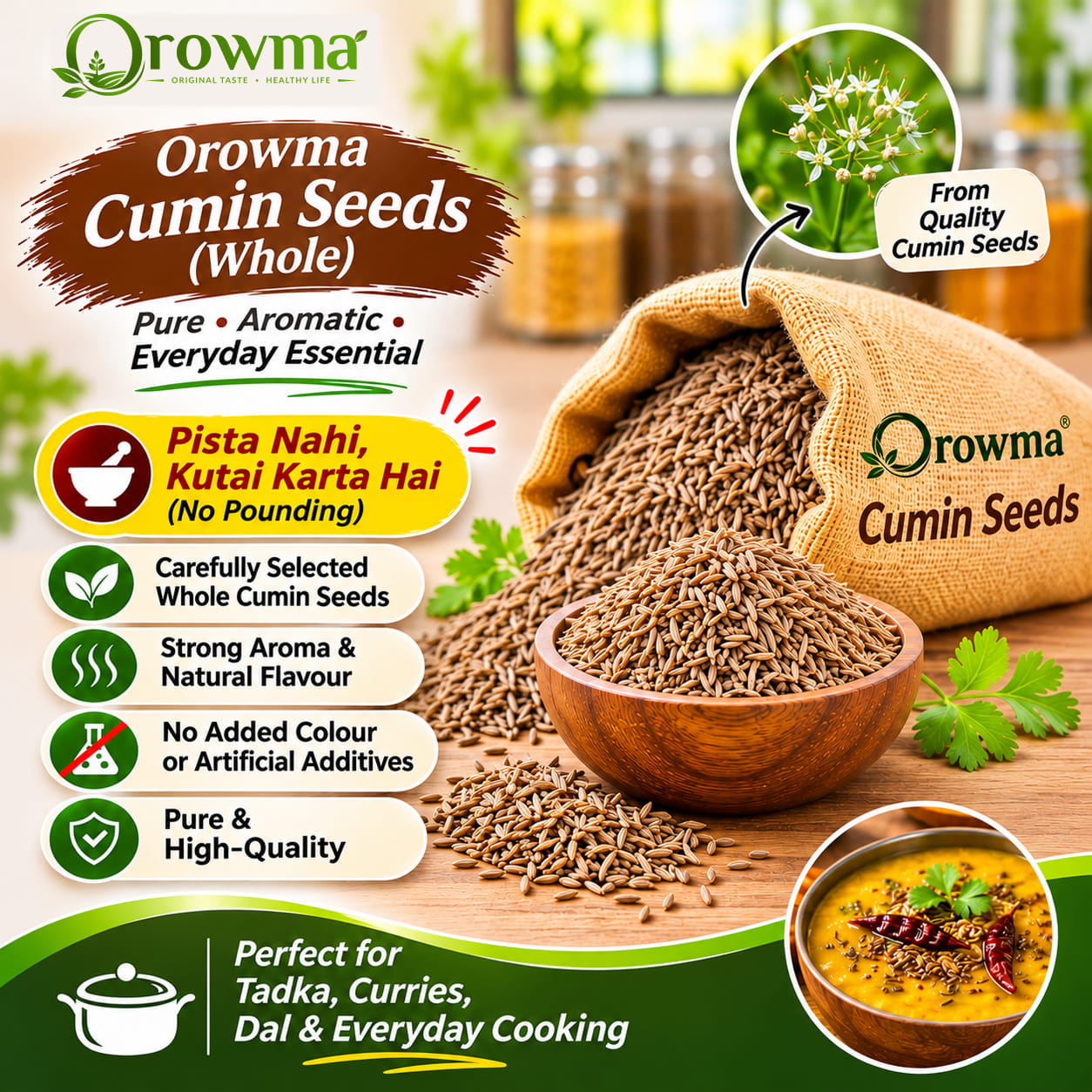


Cumin seeds, commonly called jeera, is the dried seed of the Cuminum cyminum plant. This popular whole spice is used in many Indian recipes and is known for its warm, earthy aroma and slightly peppery flavour. It is a familiar ingredient in Indian kitchens and can be used in both simple everyday meals and more elaborate recipes.
Unlike ground spices, whole jeera can be added directly to hot oil or ghee before other ingredients. This cooking method, commonly used for tadka and tempering, allows the spice to release its aroma into the dish. Because the seeds are used whole, they can also provide small bursts of flavour and texture as you eat the dish.
What Is Jeera Used For?
Whole jeera is used in a variety of everyday preparations. Some common examples include:
- Dal and lentils
- Jeera rice and pulao
- Vegetable dishes and sabzi
- Rajma and chole
- Kadhi
- Poha and upma
- Curries and gravies
- Raita and chaas
- Chaat and chutneys
- Homemade spice blends
The seeds can be used whole or roasted and ground, depending on the recipe. This makes cumin a versatile ingredient for different cooking methods, from tempering and roasting to seasoning and blending.
Cooking with Whole Jeera
One of the most common ways to use this spice is tempering. The seeds are added to hot oil or ghee and heated until they begin to crackle. Other ingredients can then be added to the tadka before the main dish is prepared.
For rice dishes such as jeera rice and pulao, the spice is generally added to the cooking fat before the rice. For dal, kadhi, and vegetables, it can form part of the tadka along with other spices and ingredients.
The seeds can also be dry-roasted in a pan. Once cooled, they can be ground and used in recipes where roasted cumin powder is preferred. Roasting should be done over controlled heat to help develop the flavour without burning the seeds. The roasted seeds can then be crushed or ground according to the recipe.
Cumin Flavour and Aroma
Cumin has a characteristic warm, earthy and slightly peppery flavour. It also has mild bitter notes that become more noticeable depending on how it is prepared.
Heating or roasting changes the aroma of the spice:
- Raw whole seeds have a milder aroma.
- Tempered cumin develops a more noticeable fragrance.
- Roasted cumin has a deeper, toasted flavour.
- Ground roasted cumin distributes the flavour more evenly through a dish.
The amount and preparation method can be adjusted according to the recipe. For lighter dishes, a small quantity can provide aroma without overpowering the other ingredients, while roasted cumin works well when a more noticeable seasoning is required.
Whole Cumin Seeds or Cumin Powder?
Whole cumin and cumin powder serve different purposes in cooking.
Whole cumin seeds are commonly used when the spice is added during tempering or when the seeds are intended to remain in the dish. They are particularly suitable for rice, dal, vegetables, and other preparations where whole spices are used.
Cumin powder is useful when the spice needs to mix evenly with other ingredients. Roasted cumin powder is commonly added to raita, chaas, chaat, chutneys, and seasoning mixtures.
Keeping whole jeera also allows it to be freshly roasted and ground in the quantity needed for a recipe. This gives you flexibility to use the same ingredient in different forms depending on the dish and cooking method.
Ingredient and Product Details
- Product: Cumin Seeds
- Common Name: Jeera
- Botanical Name: Cuminum cyminum
- Form: Whole Seeds
- Category: Whole Spice
- Ingredient: Cumin
- Common Uses: Tempering, cooking, roasting, and seasoning
Cumin is often combined with other commonly used spices such as coriander, turmeric, chilli, black pepper, and garam masala. Its earthy flavour works well with both whole and ground spices, making it a useful addition to everyday Indian cooking.
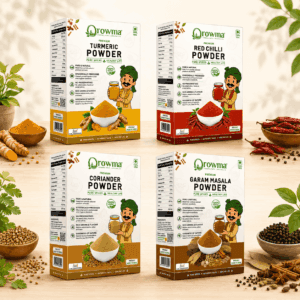
Other whole and ground options can be found in the Indian spices online collection.
How to Store Cumin
Keep the spice in a clean, dry, airtight container. Store it in a cool, dry place away from direct sunlight, moisture, and excessive heat.
Always use a clean, dry spoon when handling the product. Closing the container properly after use helps limit exposure to moisture and surrounding aromas.
For general information about the cumin plant and its culinary use, see the Encyclopaedia Britannica reference on cumin.
Explore the Orowma spice collection for other whole and ground spices.
Reviews
There are no reviews yet.